Vanilla buttercream frosting cake
Posted: December 20, 2011 Filed under: Dessert, Vegetarian | Tags: Cake, Dessert, Sugar, Vanilla 1 Comment
You have read it correctly – there are no typos in this sentence nor it is poorly constructed. While the vast majority of cakes have frosting on top or in the middle, the batter of this sponge cake was indeed made using a vanilla buttercream frosting. If there is an Annals of Improbable Culinary Research in this world, this dish would be worthwhile a cover. Or, at least a featured article. In fact, the vanilla buttercream frosting cake is so unlikely to be reproduced, that I will not even try to write down the recipe. If anything, because I cannot remember what ingredient was used when, or the proportions.
Even wannabe-food-bloggers have a less-inspired days in the kitchen. Sometimes, things just don’t go the way you expect – and as we say in Portugal, o que torto nasce, tarde ou nunca se endireita [what is born crooked, late or never gets straightened]. It looked like an semi-easy cake when I read the recipe. But a few hours latter, with the cake still half done and a totaled kitchen, it seemed that I had made a colossal strategic mistake.
Everything went sort of OK, until I tried to whisk the egg whites to soft glossy peaks. I must have done this thousands of times and at this point in my life, I don’t even consider the possibility of failure. But, not today. The white egg mix split, and there was nothing I could do about it. They were split and they remained split, no matter what grandmother tricks I used. I had no other solution but start all over again.
When I thought the worst was over and the cake was placidly sitting on the stove, I started on the frosting, using a Nigella recipe. Instead of a consistent white cream I was supposed to get, I ended up with a grey-greenish liquidy crème with lots of white floaters. I tried to sieve it, as recommended by most Mothers and professional chefs. After this delicate operation, the floaters were gone, but the grey-greenish liquidy could not be used to finish any serious cake. Again, had to start again, this time using the recipe of the original recipe. It called for a lot of butter and even more sugar, but .. it worked. I have to bitterly add, that Nigella’s recipe failed me not once, but twice.
At this point, I had my kitchen bench full of discarded elements: the gray-greenish liquid (basically, butter, sugar, vanilla and some flour), 3 yolks and something that resembled beaten white eggs. Meaning, the elements you need for a cake. Following tje directions of a very basic recipe of sponge cake, I added the egg yolks one by one to the butter and sugar “cream”. Then I tossed in enough flour – and 1 teaspoon of baking powder – to obtain a batter with a nice consistency. Finally, I folded in the egg whites. No need for a lot of TLC- it was actually quite the opposite of this.
Finally, I dropped into the stove, previously heated to 175oC (pretty much a standard of baking), and waited until a wooden stick came out dry from the center of the cake.
The result was a surprisingly light sponge cake, with a fresh almondy – vanilla taste. None of the testers was aware of the precarious conditions of this experiment, and fortunately they are all still alive. Some of them even asked for seconds (and got them).
Pumpkin bread
Posted: October 19, 2011 Filed under: Dessert, Snacks, Vegetarian | Tags: Cake, Chestnuts, Pumpkin Leave a comment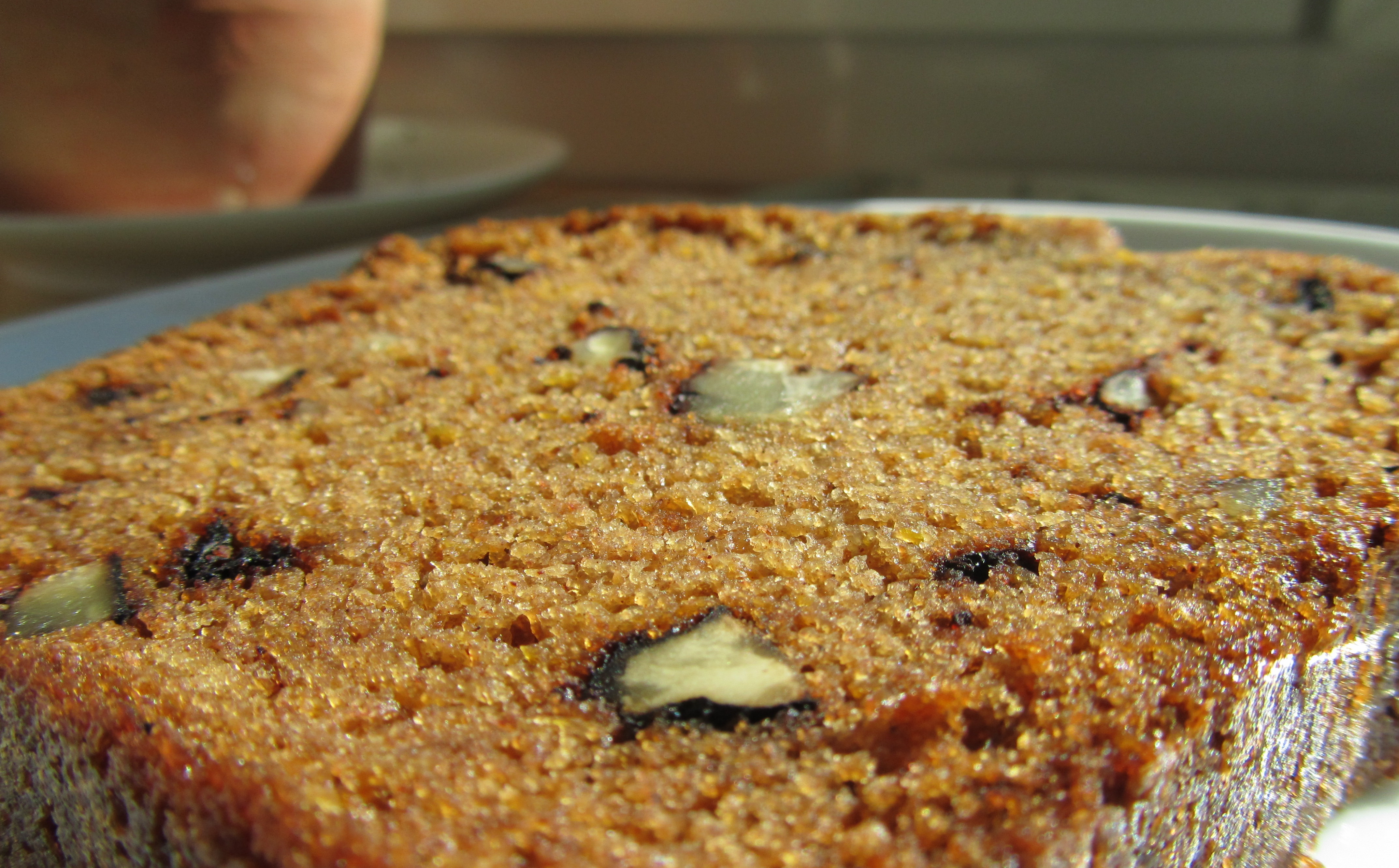
Normally, I only publish dishes I have made with my own hands. But, this pumpkin bread baked by the lovely K. made me change my mind. I picked a slice, and just couldn’t stop eating it. I had to go for a second slice. And a glass of milk. Then, everything make sense again…
Pumpkin bread
Ingredients
- 3/4 (=100g) white flour
- 3/4 (=100g) wholewheat flour
- ½ teaspoon of salt
- 1 cup sugar
- 1 teaspoon baking soda
- 1 cup pumpkin purée (see recipe below)
- ½ cup (=115mL ) olive oil
- 2 eggs, beaten
- ¼ cup water (=60mL)
- ½ teaspoon nutmeg
- ½ teaspoon cinnamon
- ½ teaspoon allspice
- ½ cup chopped walnuts or pecans
Method
Preheat oven to 350°F (=180°C) and generously coat the inside of a loaf pan with your preferred cooking spray. Use a non-stick pan, if you have one.
Sift together the flour, salt, sugar, and baking soda. Set aside your dry ingredients.
Mix the pumpkin, oil, eggs, water, and spices thoroughly. Combine your wet ingredients with the dry ingredients, mixing lightly. Fold in the nuts and pour the batter into your prepared pan.
Bake the bread for 50-60 minutes until a toothpick or knife inserted in the center of the loaf comes out clean. If the loaf is browning too quickly on top, you can cover it with foil for the last ten to fifteen minutes of baking.
Turn your pumpkin bread out of the pan and let it cool on a wire rack. Quick breads taste great warm but will crumble badly when you cut them before they have cooled completely. The bread will taste best after sitting for several hours or overnight, to allow the flavors to marry
Pumpkin purée
To make pumpkin purée, cut a small pumpkin in half and scoop out the seeds and strings. Lay the halves facedown on a foil- or parchment-lined baking sheet. Bake them at 350°F until soft, about 45 min to an hour.
You can also cut your pumpkin into pieces and roast or boil them until tender. This makes removing the skin much easier. Cool the squash, scoop out the flesh, and mash it with a fork. Freeze whatever squash you don’t use
Breakfast oat bars
Posted: October 11, 2011 Filed under: Cereal, Snacks, Vegetarian | Tags: Breakfast, Brunch, Cereal bars, Cereals, Coconut, Condensed milk, Cranberry, oats, Peanuts, Snacks, Sugar Leave a comment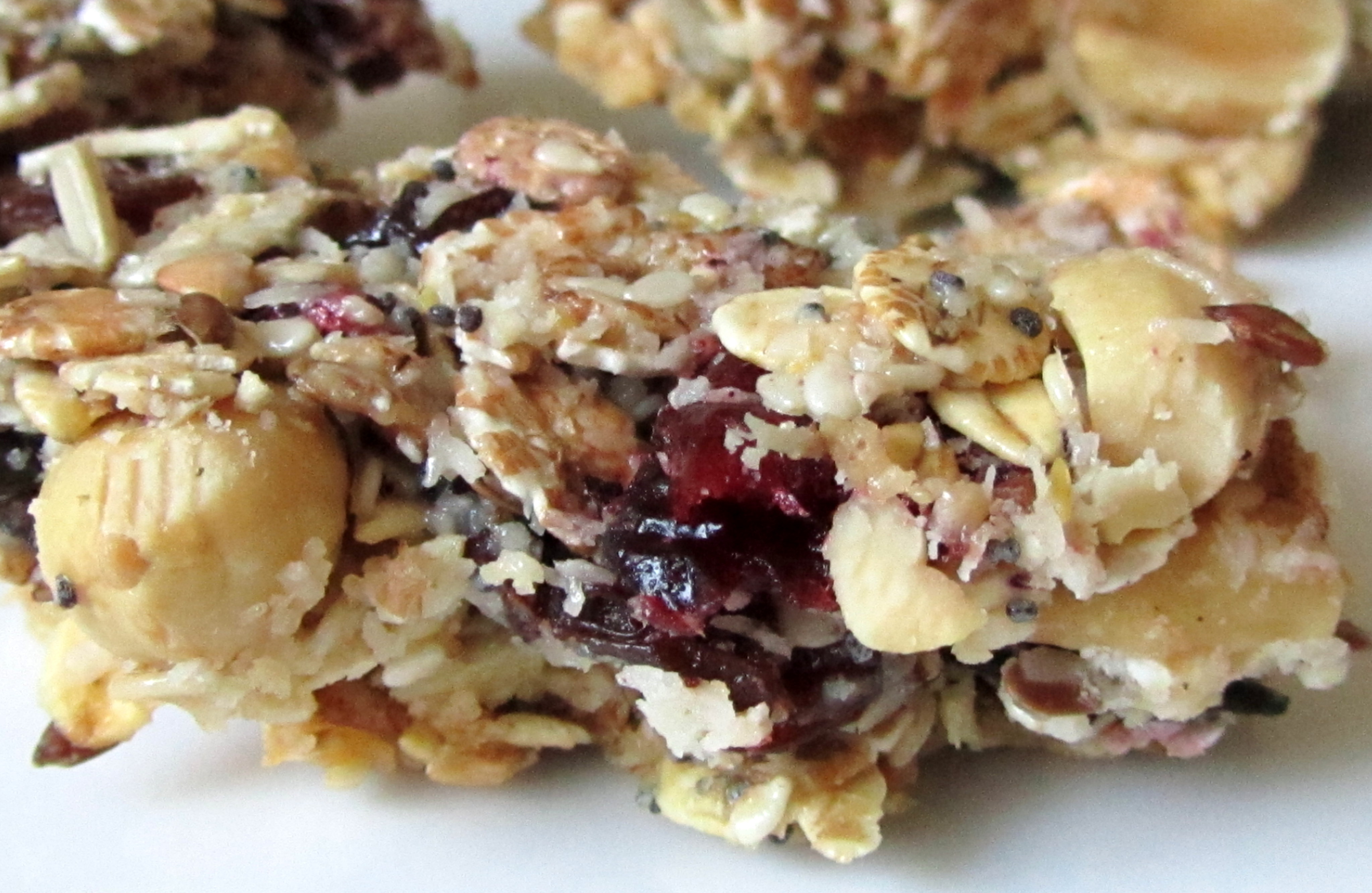
It came to my attention that yesterday, October 1oth, was World Porridge Day. While it is unlikely I’ll post a porridge dish any time soon, I indeed had on archive something that called for oats. It is a super easy recipe of home-made breakfast by Nigella I first saw on Canela moída. I tend to avoid this sort of snacks, no matter how many claims of “healthy food” they have. Most of the times they are too sugary, too chewy, too fatty, too synthetic, too caloric…. But, this home-made one is almost a guilt-less treat, packed with different flavors and textures. A healthy sugar-rush, if you will.
As usual, a few tweaks. Cranberries are difficult to source in this part of world, so I used muesli oats with added fruit. But, this is the type of dish you can do with your favorite ingredients, as long as you keep the proportion of solids and condensed milk the same. It is very quick to do, but it takes about one solid hour to bake and another one to get it cool.
Be warned: once you start doing this, there is no back to the vending machine to get a plastic one.
Breakfast oat bars
Ingredients
- 1 x 397g can condensed milk (=1 tube of condensed milk)
- 350g oats (not instant) with 50% added fruit, including a lot of cranberries (original recipe called for 250g rolled oat and 100g dried cranberries.
- 75g shredded coconut
- 125g mixed seeds (pumpkin, sunflower, sesame)
- 125g natural unsalted peanuts
Method
Preheat the oven to 130°C/gas mark 1/2, and oil a 23 x 33 x 4cm baking tin, or use a throwaway foil one.
Warm the condensed milk in a large pan.
Meanwhile, mix together all the other ingredients and then add the warmed condensed milk, using a rubber or wooden spatula to fold and distribute.
Spread the mixture into the tin and press down with the spatula or, better still, your hands to even the surface. Just make sure you are wearing disposable vinyl gloves to do this, otherwise you will end up with the sticky oats all over your fingers.
Bake for 1 hour, then remove from the oven and, after about 15 minutes, cut into four across, and four down to make 16 chunky bars. Let cool completely
Grilled aubergine with tahini dressing
Posted: September 12, 2011 Filed under: Vegetables, Vegetarian | Tags: Aubergine, Gordon Ramsay, Herbs, Tahini Leave a comment
A super easy and quick dish, perfect for a hot Summer day: grilled aubergine finished with a creamy tahini dressing, by the great Gordon Ramsay . It looks a pale shadow of the sabih, tahini sauce and zhoug dish I tried earlier this Summer, but on its simplicity it is an elegant (and) delicious dish that goes well as a salad, entrée or put on the side.
Grilled aubergine with tahini dressing
Ingredients
Grilled aubergines
- 1 large aubergine trimmed
- olive oil enough to brush and drizzle
- sea salt and black pepper
- few rosemary springs, plus extra to garnish
- 3 bay leaves, plus extra to garmish
- Juice of 1/2 lemon
Tahini dressing
- 1 tablespoon tahini paste
- 2 tablespoos of natural yogurt
- 1 tablespoon lemon juice
- 1 tablespoon runny honey
- 1 garlic clove, peeled and finely crushed
Method
Cut the aubergine into 1 cm thick slices. Generously brush with olive oil on both sides and tub all over with salt and pepper. Toss with the rosemary and the bay leaves
Heat a griddle pan, then add the aubergine slices with the herbs. Griddle for 4-5min on each side until cooked. Transfer to a serving bowl and while still warm, drizzle over some more olive oil and the lemon juice. Toss well to coat and set aside to cool.
For the tahini dressing, mix all ingredients together in a bowl until smooth. Stir in 1-2 tablespoons of hot water to loosen the dressing until it is of the consistency of double cream. Season to taste with salt and pepper.
Drizzle the dressing over the grilled aubergine and garnish with a few fresh bay leaves and rosemary springs.Serve with some warm flat bread on the side.
Classic Pizza Margherita
Posted: September 7, 2011 Filed under: Vegetables, Vegetarian | Tags: Gary Mehigan, George Calombaris, Herbs, Masterchef Australia, Mozzarella, Pizza, Tomato 1 Comment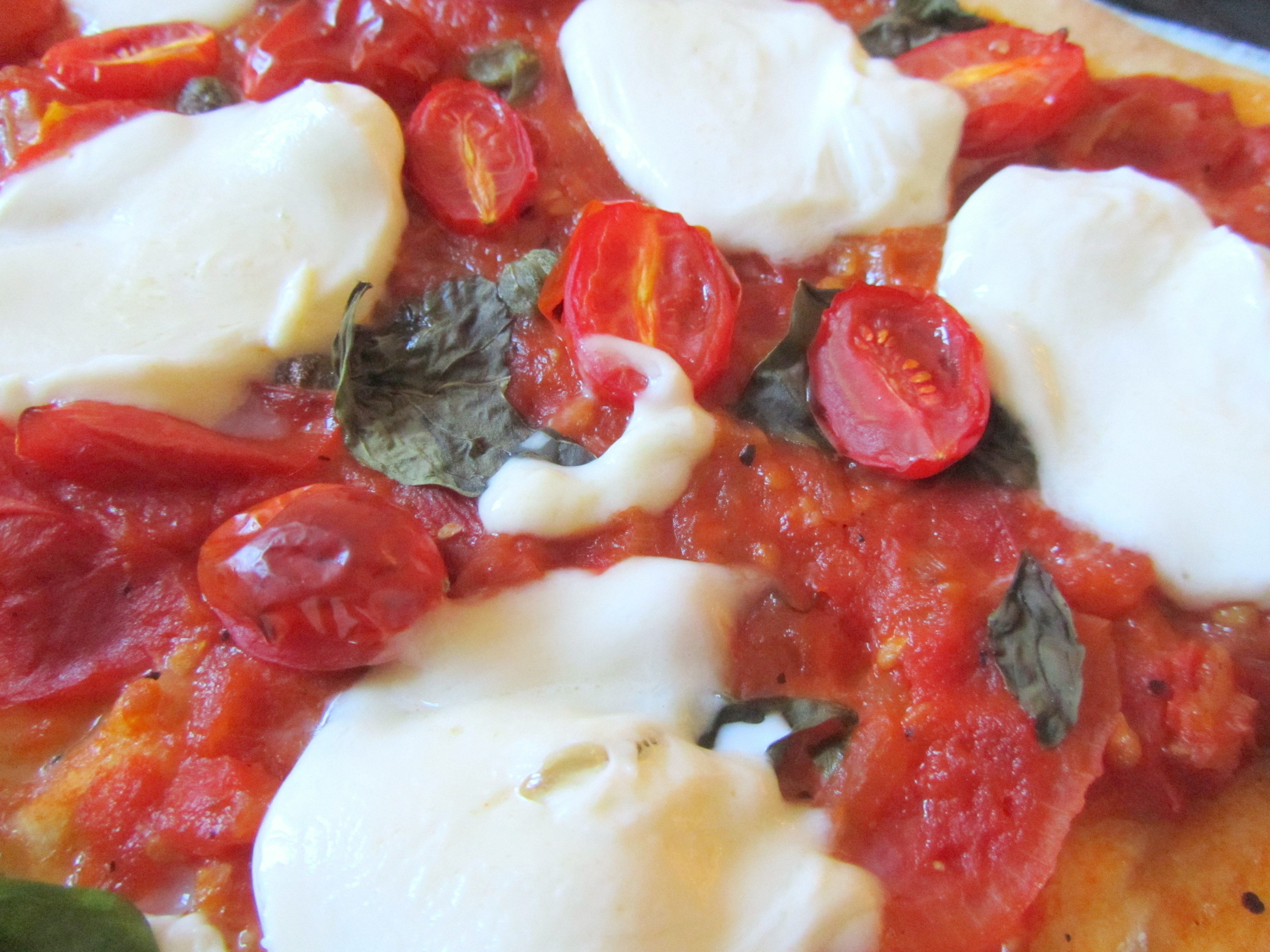
Pizza – enough said. For a quick meal and trying to keep the 11-year-old happy, I gave a go to the pizza Margherita recipe George Calombaris demonstrated during a Masterchef Australia’s Masterclass. A classic combination, which was as named after the Italian queen who first tried (and loved) the tomato, mozzarella and basil in a pizza bread.
To cook this pizza, I took a short cut that is generally a no-no for a high-class number, and used already-made dough. But, if you feel you have bake your own pizza dough, here is an recipe, also from Masterchef Australia. Also, instead of sticking to pizza sauce, I just took a jar of tomatada [Portuguese style tomato sauce] I had sitting in the fridge and put it to good use.
George and Gary (Mehigan) have another trick to bake a crispy dough for the perfect pizza. To distribute the heat evenly across the pizza base and to extract the moisture, place an unglazed terracotta tile into an oven and heat to 250°C. (I didn’t – if only I knew where to find terracota tiles in Zurich which doesn’t cost the equivalent of a 100g of white truffle).
Classic Pizza Margherita
Ingredients
- 3 tablespoons of olive oil
- 2 medium yellow onions cut in half lengthwise and sliced into thin half moons
- 2 springs fresh flat leaf parsley
- 1 bay leaf
- 2 garlic gloves minced
- 1 kg very ripped tomatoes, seeded and chopped* (or a couple of canned tomato, preferably san marzano, chopped, juices reserved).
- 2 to 3 tablespoons of double concentrated tomato paste, to taste
- 1 small fresh medium red hot chilli pepper, such as Serrano, stemmed, seeded and chopped (it is optional. Sometimes, I just add a few drops of piri piri sauce).
- Freshly grounded salt and black pepper to taste.
- 1 x 120g pizza dough portion (I use already-made pizza dough)
- Plain flour, for dusting
3 tbs pizza sauceTomato sauce to cover the base- 1 tbs baby capers, rinsed and drained
- 6-8 large basil leaves
- 9 halved oven-roasted cherry tomatoes
- 2 tbs extra virgin olive oil
- 50g buffalo mozzarella, torn
Method
Tomato sauce
Heat the oil in a large frying pan over medium heat until it shimmer. Add the onions, parsley and bay leaf and cook until nicely golden, about 15min. Add the garlic and cook for 1 min more.
Turn the heat to medium low, stir in the tomatoes and their juices, the tomato paste and chilli pepper, if using. Bring to a simmer, cook, lid ajar, stirring occasionally, until the tomatoes break down, about 30min
Toss out the parsley and bay lead and season with salt and pepper. If you wish, you can scrape the sauce into a food processor and buzz until smooth. Store the sauce in the fridge in a glass jar with a tight-fitting lid for up to 1 week. It can also be frozen for up to 2 months.
Pizza
On a floured wooden paddle or piece of baking paper, stretch out the dough into a long oval shape about 30cm long and 10-15cm wide, or to desired shape and thickness.
Spread the tomato sauce over the dough, sprinkle with baby capers and scatter over basil leaves. Place cherry tomatoes on top and drizzle with olive oil.
Slide the pizza into the stove and bake for about 5 minutes or until golden and crisp.
Brush the crust with olive oil and scatter mozzarella over pizza.
Tomato soup
Posted: August 26, 2011 Filed under: Soup, Vegetables, Vegetarian | Tags: Herbs, Spices, Tomato Leave a comment
It seems today is the last day of Summer. Tomorrow, it will rain and the temperature will drop down; next thing we know, snow will be here and we will all be wearing fluffy thing around our ears. It might be my last chance to post this (cold) tomato soup.
I came across many different versions of tomato soups: my Mother’s (with potatoes), my nanny’s (with loads of potatoes, croutons and a poached egg), Maria de Lourdes Modesto‘s (with rice), the German way (with cabbage), the Swiss way (boil the tomatoes to death and then add an equal amount in volume of cream), the Austrian way (as before, plus pumpkin seed oil), the Spanish way (called gazpacho and eaten cold. In fact, God forbids it’s served warm) … And then, there is this one, the mean tomato soup Yotam Ottolenghi‘s Mother used to do. I took the liberty of replacing the coriander by manjericão (Ocimum basilicum), better known as Portuguese basil. Not food snobbery: I actually have it growing on a pot, courtesy of P. and D.
Tomato soup
Ingredients
- 2 tbsp olive oil, plus extra to finish
- 1 large onion, peeled and chopped
- 1 tsp cumin seeds
- 2 garlic cloves, crushed
- 750ml vegetable stock
- 4 large ripe tomatoes, chopped
- 400ml tin chopped Italian tomatoes
- 1 tbsp caster sugar
- 1 slice sourdough bread
- 2 tbsp chopped coriander, plus extra to finish (I used Portuguese basil)
- Salt and black pepper
Method
Heat the oil in a medium saucepan, add the onion and sauté, stirring often, for five minutes, until translucent. Add the cumin and garlic, and fry for two minutes, then add the stock, both fresh and tinned tomatoes, sugar, a teaspoon of salt and a good grind of black pepper. Bring to a gentle simmer and cook for 20 minutes, adding the bread halfway through. Add the coriander, then pulse-blitz the soup a few times to break down the tomatoes a bit – you want them a little coarse and chunky. (This soup should be quite thick, but add a little water to thin it down if you prefer.) Serve drizzled with oil and garnished with fresh coriander.
Sabih, tahini sauce, zhoug and salad
Posted: August 23, 2011 Filed under: Eggs, Salad, Vegetables, Vegetarian | Tags: Aubergine, bread, Eggs, Herbs, Salad, Spices, Tahini, Yotam Ottolenghi 1 Comment
An Israeli chef gives his interpretation of an Iraqi dish, topped with an Yemenite green chilli sauce. And, a pretty damn good it was, just ideal for this sort of weather…. The recipe was brought to the Guardian (here), by the hand of Yotam Ottonleghi. You know the drill: kilometric list of ingredients and several elements to put together at the end. But, it is worthwhile the effort – the combination of flavors and textures is delicate and at the same time exciting. Each one has its place and none is over-powering. It can be cooked in large batches and stored in the fridge to be eaten ad hoc.
Sabih, tahini sauce, zhoug and salad
Ingredients
For the sabih
- 2 large aubergines
- About 300ml sunflower oil
- 4 slices rustic white bread, toasted
- 4 free-range eggs, hard-boiled and cut into 1cm-thick slices
- Salt and black pepper
For the tahini sauce
- 100g tahini paste
- 80ml water
- 20ml lemon juice
- 1 small garlic clove, crushed
For the salad
- 2 ripe tomatoes, cut into 1cm dice
- 2 mini cucumbers, cut into 1cm dice
- 2 spring onions, thinly sliced
- 1½ tbsp chopped parsley
- 2 tsp lemon juice
- 1½ tbsp olive oil
For the zhoug
- For the zhoug
- 35g coriander
- 20g parsley
- 2 green chillies
- ½ tsp ground cumin
- ¼ tsp ground cardamom
- ⅛ tsp sugar
- ¼ tsp salt
- 2 garlic cloves, crushed
- 3 tbsp olive oil
- 2 tbsp water
Method
Using a vegetable peeler, peel off strips of aubergine skin from top to bottom, so they end up like a zebra, with alternating black-and-white stripes. Cut both aubergines widthways into 2.5cm-thick slices.
Heat the sunflower oil in a wide pan. Carefully – the oil spits – fry the aubergine in batches until nice and dark, turning once, for six to eight minutes; add oil if needed as you cook the batches. When done, the aubergine should be completely tender in the centre. Remove from the pan, leave to drain on kitchen paper, then sprinkle with salt.
To make the zhoug, put all the ingredients in a food processor and blitz to a smooth paste. For the tahini sauce, put the tahini paste, water, lemon juice, garlic and a pinch of salt in a bowl. Mix well, and add a little more water, if needed, so its consistency is slightly runnier than honey. Make the salad by mixing the tomato, cucumber, spring onion, parsley, lemon juice and olive oil. Add salt and pepper to taste.
To serve, place a slice of bread on each plate. Spoon a tablespoon of tahini sauce over each, then arrange overlapping slices of aubergine on top. Drizzle over some more tahini, without completely covering the aubergines. Season each egg slice, and lay on top of the aubergine. Drizzle more tahini on top and spoon over as much zhoug as you like – be careful, it’s hot! Serve the salad on the side; spoon a little on top of each sabih, too, if you like. Store any leftover zhoug in a sealed container in the fridge – it will keep for a week at least.
Coconut and zucchini bread
Posted: August 8, 2011 Filed under: Dessert, Vegetarian | Tags: Cake, Coconut, Courgette, Food blogger recipe, Sugar, Zucchini 4 Comments
I saw it on Canela Moída, whom had seen it on The Novice Housewife, whom had seen it on Thru The Bugs On My Windshield, whom had seen it on Meet the Swans whom had seen it on Cooking Light Comfort Food Cookbook. Somewhere along the way, the bananas in the original recipe were replaced by an equivalent amount of zucchini (= courgette=calabacin). The combination of flavors sounds a bit iffy – Zucchini? in a cake?? with coconut??? But, have not prejudices: the result is scrumptious. Not only it passed the 11-year old test, but also the 8-month eat it all with gusto and impatience. If he only knew those green dots belongs the same family than the green soups he spits all over himself…
Some bloggers made a Coconut Rum Lime glaze to put on top of it. I am not a big fan of sugary things and excessive ornamentation of cakes, and skipped it. Keeping on sugar matters, this cake is not at all sweet. If you have a sweet tooth, you might want to add more sugar than the quantity I used. Or replace the zucchini by an equivalent amount of bananas.
Coconut Zucchini Bread
Ingredients
- 1/4 cup butter (about 60g)
- 1 cup sugar (about 200g. You might want to increase the amount, if you like yours more sweet)
- 2 whole eggs
- 1 1/2 cups ripe zucchini, grated (about 1 medium size
2zucchinis,app 120g) - 1/3 cup plain yogurt (I used a whole small pack, with about 180g, minus 1 table spoon))
- 1 teaspoon rum (I used Malibu – maybe a little more than a 1 teaspoon)
- The seeds of a vanilla pod (or 1 teaspoon of vanilla extract)
- 2/3 cup grated coconut (about 100g)
- 3/4 teaspoon baking soda
- 1/2 tsp salt
- 2 cups flour (about 250g)
Methods
Pre heat the oven to 180 oC . Grease a loaf pan with butter and powder it with flour.
Cream butter and sugar until the mixture is white and fluffy. Then beat in the eggs, one at a time, mixing well.
Add the zucchini, the yogurt, the vanilla seeds and the rum. Beat until well blended.
Fold in the coconut and all the dry ingredients, and mix until just blended (do not over stir).
Spoon the batter into the loaf pan previously buttered.
Bake for about an hour, or until toothpick comes out clean from the middle of the bread.
Cool in the pan for about 10 minutes and then transfer to serving plate.
Coconut Rum Lime Glaze
Ingredients
- 3 cups sugar
- The seeds of a vanilla pod (or 1 teaspoon of vanilla extract)
- 1 teaspoon of rum or rum extract
- 3 teaspoon of freshly squeezed lime juice
- Milk as required to get the glaze to the right consistency (you can use coconut milk, in case you have that in hand)
- Roasted coconut to taste
Method
Mix all ingredients except the milk in a medium bowl. Add milk until it becomes a thick but smooth glaze. Set aside.
Toast coconut under the broiler until just browned. Set aside.
Drizzle glaze over bread. Top with toasted coconut and lime zest.
Russian egg and mushroom salad with mustard vinaigrette
Posted: August 3, 2011 Filed under: Eggs, Salad, Vegetarian | Tags: Egg, Food blogger recipe, Herbs, Mushrooms, Salad 1 Comment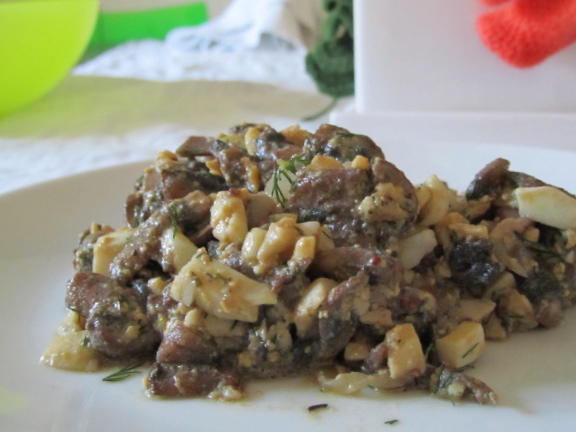
I saw it on Orangette, who warned in no equivocal terms: this is not a beautiful egg salad. She was right. Indeed, this is not a good-looking salad. In fact, it is as ugly as dark stormy night. But, the flavors! Oh, the flavors! It is just something that you cook, and have to it eat. And eat it again. And again. And again… I now do it in relatively large batches, and try to make it last through the week by carefully rationing the portions. The flavors deepen over time, and can be eaten warm or cold. In the original recipe, the salad is served over toasted bread.
As I still cannot see mayonnaise in front of me without feeling nauseous, I replaced it with home-made mustard vinaigrette. I used the recipe of The Reluctant Gourmet. Actually, his post on home-made vinaigrette is worthwhile reading if you have a vinaigrette fetich – it is one of the most comprehensive and detailed explanations I have seen. Not that I have seen many, but after reading his, I don’t feel the need to look at something else.
Russian egg and mushroom salad with mustard vinaigrette
Ingredients
Salad
- 5 tablespoons of canola oil (I replaced it with olive oil, as usual)
- 500g mushrooms, roughly chopped
- 1 small yellow onion, roughly chopped
- 1 bunch of finely chopped fresh dill (about 1/3 of a cup)
- 4 hard-boiled eggs, roughly chopped
- Kosher salt
- Freshly ground black pepper
Mustard Vinaigrette
- 1 glove of garlic, smashed
- 2 tablespoons of balsamic vinegar
- 1 teaspoon Dijon mustard (I also use old style mustard with all its grains)
- 5-6 tablespoons olive oil
- pinch of dried parsley
- pinch of dried thyme
- salt and freshly ground pepper to taste
Methods
Heat 3 tablespoons of the oil in a large frying pan over medium-high heat, and add the mushrooms. (If they don’t all fit in the pan at once, let the first panful wilt down a bit, and then add the rest. It’ll work out fine.) Cook, stirring often, until lighly browned, 14-16 minutes. Transfer to a large bowl, and set aside. Wipe out the frying pan.
Heat the remaining oil in the frying pan over medium-high heat, and add the onion. Cook, stirring often, until the onions begin to soften; then reduce the heat to low and continue to cook until lightly caramelized, 10-15 minutes. Transfer to the bowl with the mushrooms. Add the dill and eggs, and stir to mix.
For the vinaigrette, in a clean jar or small bowl, add the vinegar, garlic, mustard and mix well. Slowly add the olive oil while either whisking or stirring rapidly with your fork (I use a small stirrer, and add 1 spoon of olive oil at a time). Add the parsley and thyme, salt and pepper, taste and adjust seasonings.
If you really must use mayonnaise, the in a small bowl, whisk together a 3/4 cup of mayonnaise, with 2 tablespoons of mustard, and 1 tablespoon of fresh lemon juice
Pile the salad on lightly toasted bread – preferably sourdough rye, if you’ve got some – and serve open-faced.
Tzatziki
Posted: May 18, 2011 Filed under: Salad, Vegetarian | Tags: Cucumber, Yoghurt 1 Comment
It was a very hot day, and all we feel like eating was something cool and fresh. A little couscous salad, roasted aubergines and of course that creamy cucumbery thing the Greeks call Tzatziki. It tastes much better by a big blue sea, but nevertheless it is always welcome in a bright Summer day. The recipe was adapted from Reference Answers.
Tzatziki
Ingredients
- 2 cups plain yogurt
- 1 unpeeled cucumber, finely chopped
- 2 cloves garlic, crushed
- 2 Tablespoons olive oil
- 1 teaspoon salt
Method
In a bowl, add the cucumber, garlic, olive oil, and salt to the yogurt.
Blend well with a fork and refrigerate.
Serve with toasted pieces of pita bread or fresh vegetables, such as carrots, celery, or peppers.
 Lucie Loves Food