Baked stuffed zucchini
Posted: November 8, 2011 Filed under: Beef, Pork, Vegetables | Tags: Beef, Courgette, minced meat, Pork, Tomato, Zucchini Leave a comment
Another recipe with minimal verbiage. I happened to have all these ingredients in the fridge. A few google searches after, I found this baked stuffed zucchini on All Recipes. A few tweaks after, dinner was served.
Baked stuffed zucchini
Ingredients
- 4 large zucchini
- 2 firm tomatoes, seeded and chopped
- 1 egg, lightly beaten
- 2 tbsp dried mint (fresh mint would have been better, but I had none left)
- 450g g minced meet (pork and beef)
- 1 onion, chopped
- 2 garlic cloves, crushed
- 250g tomato sauce (I used tomatada, but passata or a lightly diluted tomato sauce could also work well)
- 1 spring chopped fresh rosemary
- 4 tbsp Grana Padano or Parmesan
- salt and freshly ground black pepper
Place the zucchini in a shallow baking dish or roasting tin, cover with foil and bake for 20 minutes or until tender – they should pierce easily with a fork.
Mix the eggs with the chopped plum tomatoes, mint, and pepper to season. Set aside.
Fry the minced meat over a medium heat until browned. Add the onion and garlic, cook for a further 5 minutes until the onion has softened. Stir in the tomato sauce, reserved zucchini pulp and rosemary. Bring to the boil, then reduce the heat and simmer gently for 10–15 minutes. Stir in the egg mixture and mix together.
5. Spoon the stuffing mixture into the zucchini boats and sprinkle with the cheese. Bake for 15–20 minutes until golden and crispy on top. Serve immediately.
Beef stew with sweet carrots, peas and mushrooms
Posted: October 31, 2011 Filed under: Beef, Vegetables | Tags: Beef, Carrots, Mushrooms, Peas, Stew Leave a comment
No use to fight Autumn anymore – it is arrived and is here to stay until Winter shows up. It is now time to start cooking food that makes you forget the cold outside and puts a note of color in your day.
Beef stew with sweet carrots, peas and mushrooms
Ingredients
- 450g of beef, cut in cubes
- 50g of flour (or maizena)
- 250g of button mushrooms
- 3 onions, cut in half moons
- 5 carrots, cut in 2cm slices
- 1 clove of garlic, minced
- 100ml of red wine
- 1 spring of rosemary
- 200ml of stock
- 250g of peas (I used frozen peas)
- olive oil as required
- salt and pepper to taste
Method
In a frying pan, heat 2 tablespoons of olive oil until it shimmer. Toss the mushrooms. Let them fry until soft and fragrant. Reserve.
Place the beef cubes and flour in a bowl, season with salt and pepper and toss to coat. Shake off the excess of flour. Heat 2 tablespoons olive oil in a large frying pan over a high heat until it shimmer. Add half the floured meat and fry until sealed and meat has begun to brown. Be careful not too put too many pieces in the frying pan. Instead of frying, the meat will boil to death, with rather unpleasant results. Reserve the meat.
To the same frying pan, add the onion and the carrots. Pan fry until the onions are caramelised and the carrots are soft, stirring occasionally (It will take about 15minutes). Add the grounded garlic and let it combine with the vegetables, stirring for about 1 minute. Take all out of the frying pan and reserve. Pour in the pan approximately 100 mL of red wine stir well to combine and deglaze the frying pan. When the sauce starts to thicken, toss in the meat and reserved vegetables. Mix well to combine, and then add the vegetable stock. Add the bay leave and the rosemary spring.
When it comes to boil, toss the peas in and let simmer for about 15min, until the stock reduces to half and the sauce is a bit thick. Take out from the stove and let it rest for a bit.
Pan-fried pork with chestnuts
Posted: October 21, 2011 Filed under: Pork | Tags: Chefe Silva, Chestnuts, Pork, Portugal, Spices Leave a comment
To keep up with the Autumn spirit, an old Portuguese classic. The sort of dish that reminds of home, rich, tasty hearty. Just what you need for a cold grey day.
The recipe is by Chefe Silva, from his book Recipes for My Friends. The paprika is a replacement of colarau, a condiment used in Portuguese cuisine made with the different types of Capsicum. They are more or less the same, but colorau tends to have a stronger saltier taste and give a radioactive red color to the food.
Pan-fried pork with chestnuts
Ingredients
- 700g pork (preferably loin or sirloin)
- 1,5 dL white wine
- Salt, pepper and paprika
- 1 bay leaf
- 2 smashed gloves of garlic
- 1 tablespoon lard
- 750g frozen chestnuts
Method
Cut the meat into small pieces weighing app. 15g and season them with white wine, salt, pepper, paprika and the garlic. Let it marinate for about 1 hour. Then drain the meat, squeezing it very well. Save the marinade. Heat up the lard in heavy bottom frying pan, add the meat and let it fry at strong heat, stirring well. When brown add the chestnuts and let it fry for another 3 to 5 min. Then add the marinade you saved, and let reduce for about 2 min. Serve the dish with oranges or with apple jam.
Pumpkin bread
Posted: October 19, 2011 Filed under: Dessert, Snacks, Vegetarian | Tags: Cake, Chestnuts, Pumpkin Leave a comment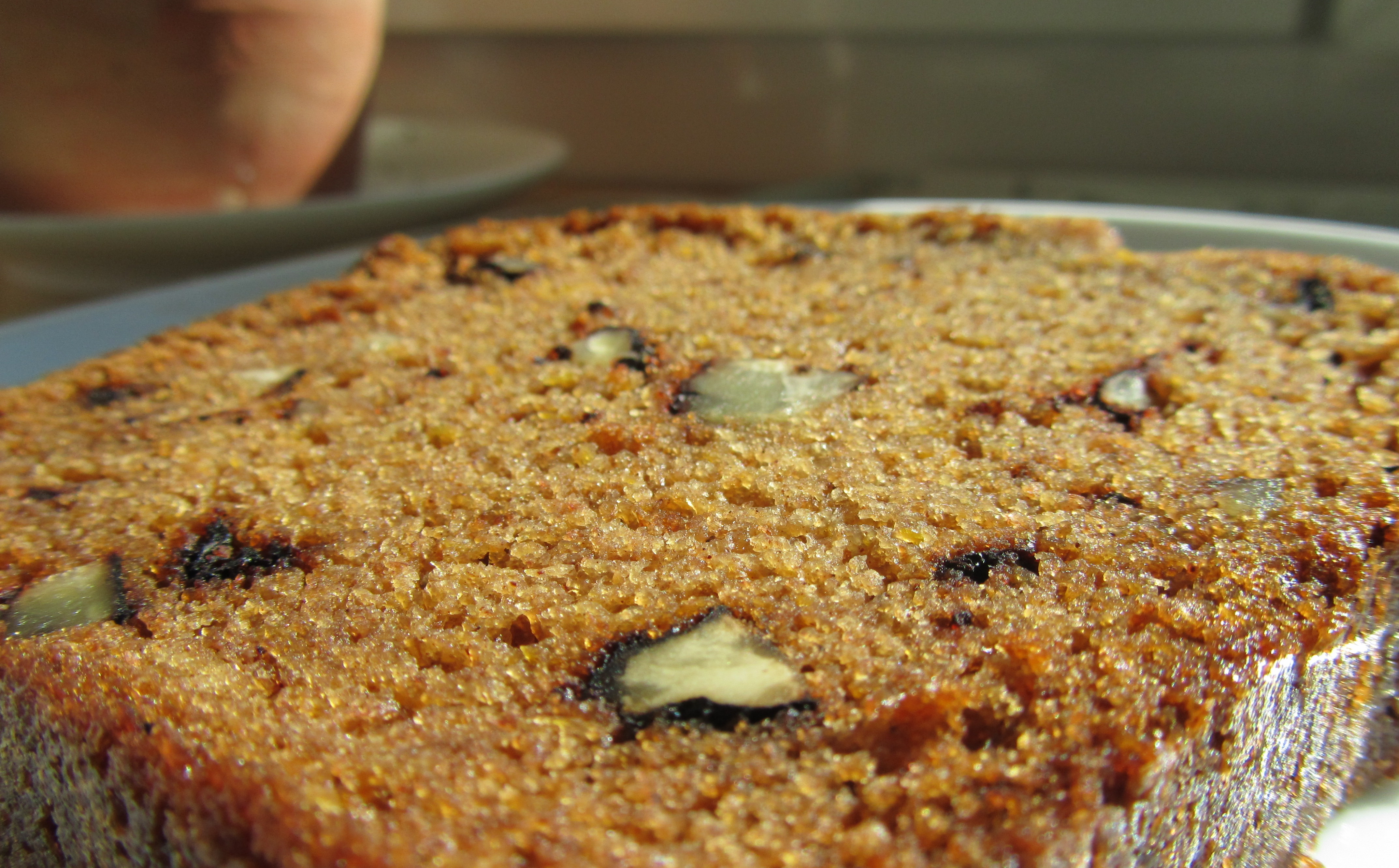
Normally, I only publish dishes I have made with my own hands. But, this pumpkin bread baked by the lovely K. made me change my mind. I picked a slice, and just couldn’t stop eating it. I had to go for a second slice. And a glass of milk. Then, everything make sense again…
Pumpkin bread
Ingredients
- 3/4 (=100g) white flour
- 3/4 (=100g) wholewheat flour
- ½ teaspoon of salt
- 1 cup sugar
- 1 teaspoon baking soda
- 1 cup pumpkin purée (see recipe below)
- ½ cup (=115mL ) olive oil
- 2 eggs, beaten
- ¼ cup water (=60mL)
- ½ teaspoon nutmeg
- ½ teaspoon cinnamon
- ½ teaspoon allspice
- ½ cup chopped walnuts or pecans
Method
Preheat oven to 350°F (=180°C) and generously coat the inside of a loaf pan with your preferred cooking spray. Use a non-stick pan, if you have one.
Sift together the flour, salt, sugar, and baking soda. Set aside your dry ingredients.
Mix the pumpkin, oil, eggs, water, and spices thoroughly. Combine your wet ingredients with the dry ingredients, mixing lightly. Fold in the nuts and pour the batter into your prepared pan.
Bake the bread for 50-60 minutes until a toothpick or knife inserted in the center of the loaf comes out clean. If the loaf is browning too quickly on top, you can cover it with foil for the last ten to fifteen minutes of baking.
Turn your pumpkin bread out of the pan and let it cool on a wire rack. Quick breads taste great warm but will crumble badly when you cut them before they have cooled completely. The bread will taste best after sitting for several hours or overnight, to allow the flavors to marry
Pumpkin purée
To make pumpkin purée, cut a small pumpkin in half and scoop out the seeds and strings. Lay the halves facedown on a foil- or parchment-lined baking sheet. Bake them at 350°F until soft, about 45 min to an hour.
You can also cut your pumpkin into pieces and roast or boil them until tender. This makes removing the skin much easier. Cool the squash, scoop out the flesh, and mash it with a fork. Freeze whatever squash you don’t use
Hot sweet baked pumpkin
Posted: October 17, 2011 Filed under: Vegetables | Tags: Ginger, Pumpkin, Spicy, Sugar Leave a comment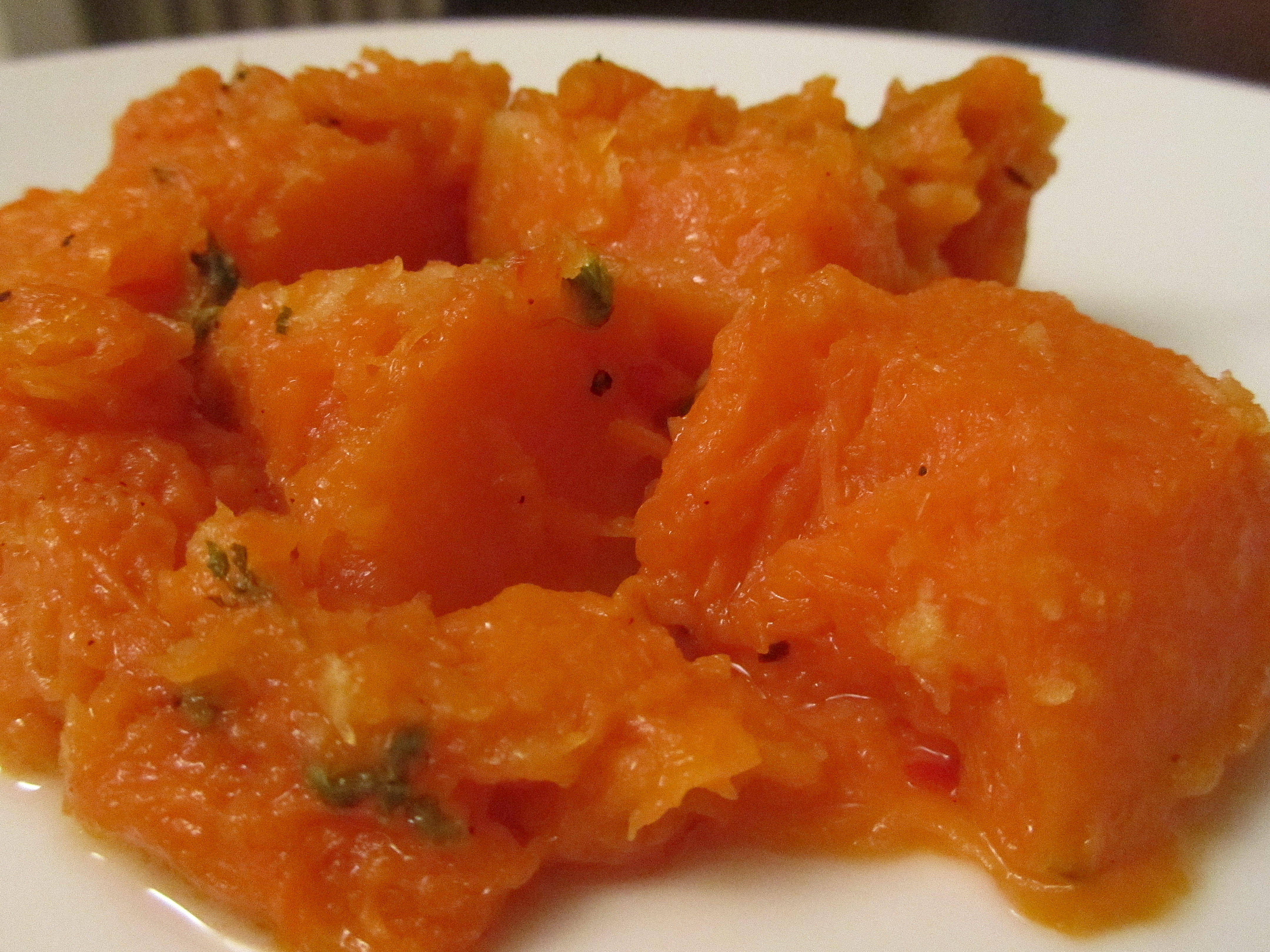
And to start well to Autumn, a lovely pumpkin dish by Nigel Slater. Sweet, hot and delicious…
Hot sweet baked pumpkin
Ingredients
- 1,5kg pumpkin or butternut squash, unpeeled weight, chopped in 3cm cubes
- 50g butter
For the dressing:
- sugar 4 tablespoons
- water 200ml
- ginger a thumb-sized lump, chopped
- 1 large, medium hot, chopped ed chilli
- the juice and the zest of 2 limes
- 1 tablespoon of fish sauce
- coriander a small bunch, finely chopped
Method
Set the oven at 200 oC/gas mark 6. Peel the pumpkin, discard the seeds and fibres, and cut the flesh into small pieces, about 3cm in thickness. Put them in a roasting tin with the butter and bake for 50-60 minutes, turning occasionally, till soft enough to take the point of a knife.
Put the sugar and water in a shallow pan and bring to the boil. Turn the heat down and simmer till the liquid has reduced by half. Meanwhile, peel and roughly chop the ginger and put in the bowl of a food processor. Halve the chilli lengthways and chop roughly, removing the seeds if you wish for a less spicy seasoning. Add the chilli to the bowl, then grate in the zest of the limes. Squeeze in the juice from the limes, then process to a coarse paste.
Stir the spice mixture into the syrup and simmer for a minute before adding the fish sauce and coriander. Remove from the heat.
When the pumpkin is fully tender, spoon most of the chilli sauce over, toss gently to coat each piece, then return to the oven for a further 5-10 minutes. Toss with the remaining chilli sauce and serve.
Inspired by a moussaka
Posted: October 13, 2011 Filed under: Beef, Vegetables Leave a comment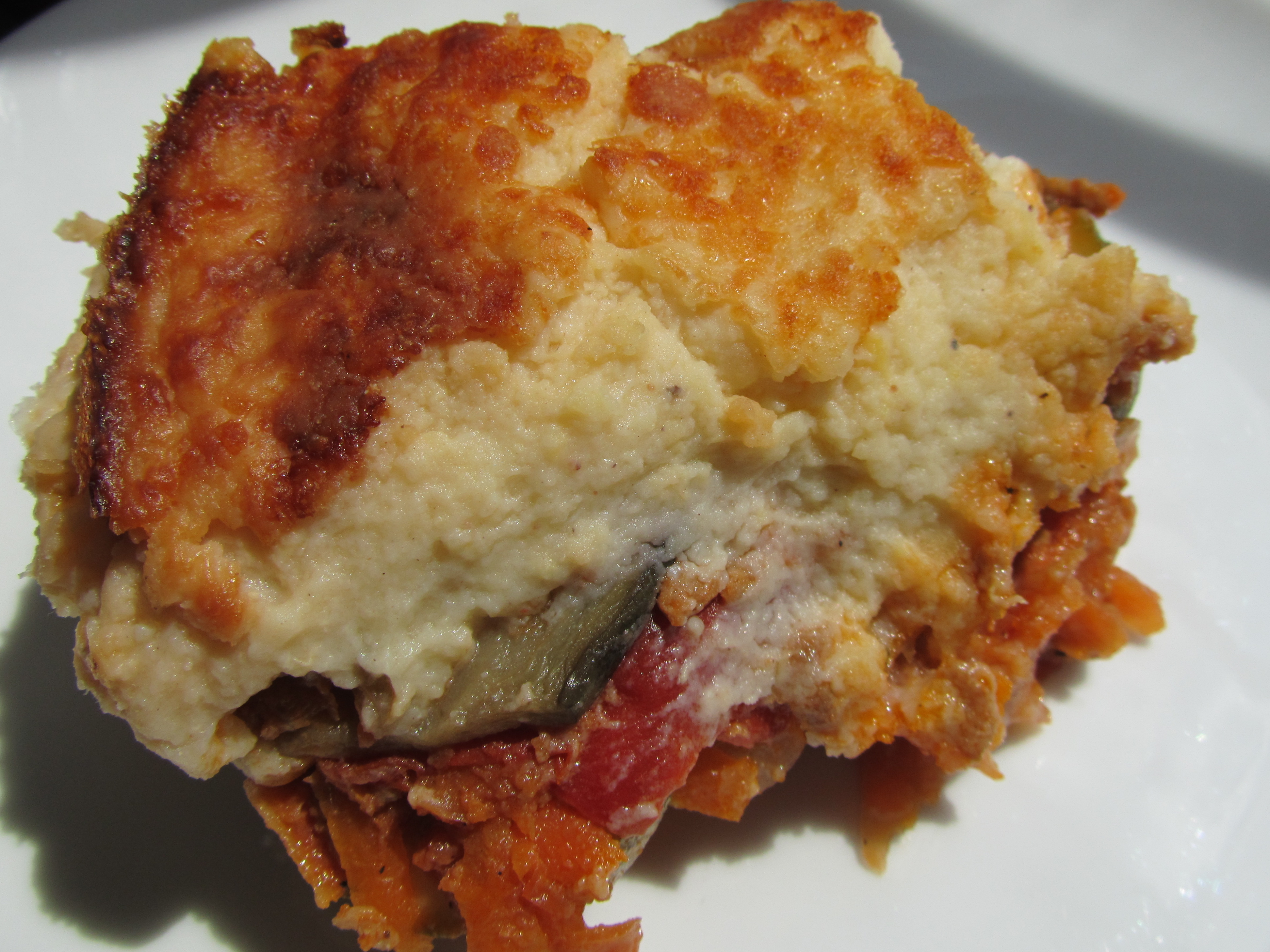
It all started with a Masterchef Australia Masterclass. One of the chef hosts, George Calombaris, of Greek descent, invited his mother, Mary, to show how to do a proper moussaka. Mrs Calombaris taught George to cook the way that her mother had taught her. Her mother’s mother thought her daughter to cook the way her mother had taught her. And her mother’s mother’s mother… The thing is that Mrs Calombaris is adamant on keeping the dishes faithful to the tradition. Any modification on the original recipe is taken as major offense – and Mrs Calombaris won’t hesitate to scold George for bastardising traditional Greek dishes. Actually, it sounds a lot more like yelling at him, while he just rolls his eyes.
When I started cooking the moussaka, I already had a minor modification in mind: the cheese. Mrs Calombaris’s recipe calls for kefalograviera, which is impossible to source here. It ended up being replaced by less the less greek grana padano – another tasty hard cheese. Then the full cream milk was replaced by less fatty milk. And, the lamb, pork and veal mince give place to beef and pork. Followed by replacing the tomato passata by Portuguese tomatada. Now that we were at it, I pulled a few zucchini I had languishing in the bottom of the fridge. In less time it takes to write it, I had totally bastardized a Greek classic… no way I would call this a moussaka. I was even feeling Mrs Calombaris reprimands on the back of my mind. So, here it is: a seriously good dish, just perfect for a cold Winter nights, inspired by a moussaka. It just warms you until your heart.
Inspired by a moussaka
Ingredients
- ¼ cup olive oil
- 3 aubergines, peeled vertically like a zebra and sliced 5mm thick
- 3 zucchini sliced 5mm thick
- 500g pork and beef mince
- 1 onion, finely diced
- 2 cloves garlic, finely diced
- 1 tablespoon dried oregano
- 1 tablespoon thyme, chopped
- 1 tablespoon rosemary, chopped
- 2 cinnamon sticks
- 250g crushed tomatoes
- 400g tomato sauce (it can be replaced by 400g tomato passata)
- 2 tablespoons tomato paste
- 1 ½ cups water
- Olive oil, for frying
- 4 large potatoes, sliced 5mm thick
For the bechamel
- 100g butter
- 100g plain flour
- 600ml (full cream milk), warmed
- 100g grana padano, grated
- 1 egg
- Extra grana padano cheese, grated
Method
1. Preheat oven to 180⁰C.
2. Lay the aubergines over a shallow tray or dish and sprinkle liberally with salt. Cover with muslin or a clean tea towel and set aside for 30 minutes.
3. Heat oil in a large frying pan or saucepan, add the minced meat and cook until browned and meat breaks up. Add onion and sauté until softened. Add garlic, oregano, thyme, rosemary and cinnamon quills and allow to cook for 3-5 minutes, stirring occasionally.
4. Add crushed tomatoes, tomato passata, tomato paste and water, bring to the boil, reduce heat to low and simmer for ½ hour. Season with salt and pepper to taste.
5. Pour oil into a frying pan approximately 1cm deep, place over a high heat and shallow fry potatoes for 3-4 minutes on each side or until tender. Drain on paper towel.
6. Pat dry the aubergine and pan fry on each side until golden yet still firm. Drain on paper towel.
7. Pat dry the zucchini and pan fry on each side until is soft. Drain on paper towel.
8. For béchamel, melt butter in a heavy based saucepan. Add flour, stir over a low heat for 2 minutes.
9. Slowly add warm milk, stirring continuously until thick. Add extra milk if sauce is too thick.
10. Whisk in the cheese and the egg, season to taste.
11. To assemble, oil a casserole dish and layer as follows. Meat sauce, potato, sauce, potato, sauce, zucchini, sauce, potato, aubergine and remaining sauce. Cover with béchamel and grate extra cheese over.
12. Bake for 45 minutes until browned and béchamel has set. Serve.
Breakfast oat bars
Posted: October 11, 2011 Filed under: Cereal, Snacks, Vegetarian | Tags: Breakfast, Brunch, Cereal bars, Cereals, Coconut, Condensed milk, Cranberry, oats, Peanuts, Snacks, Sugar Leave a comment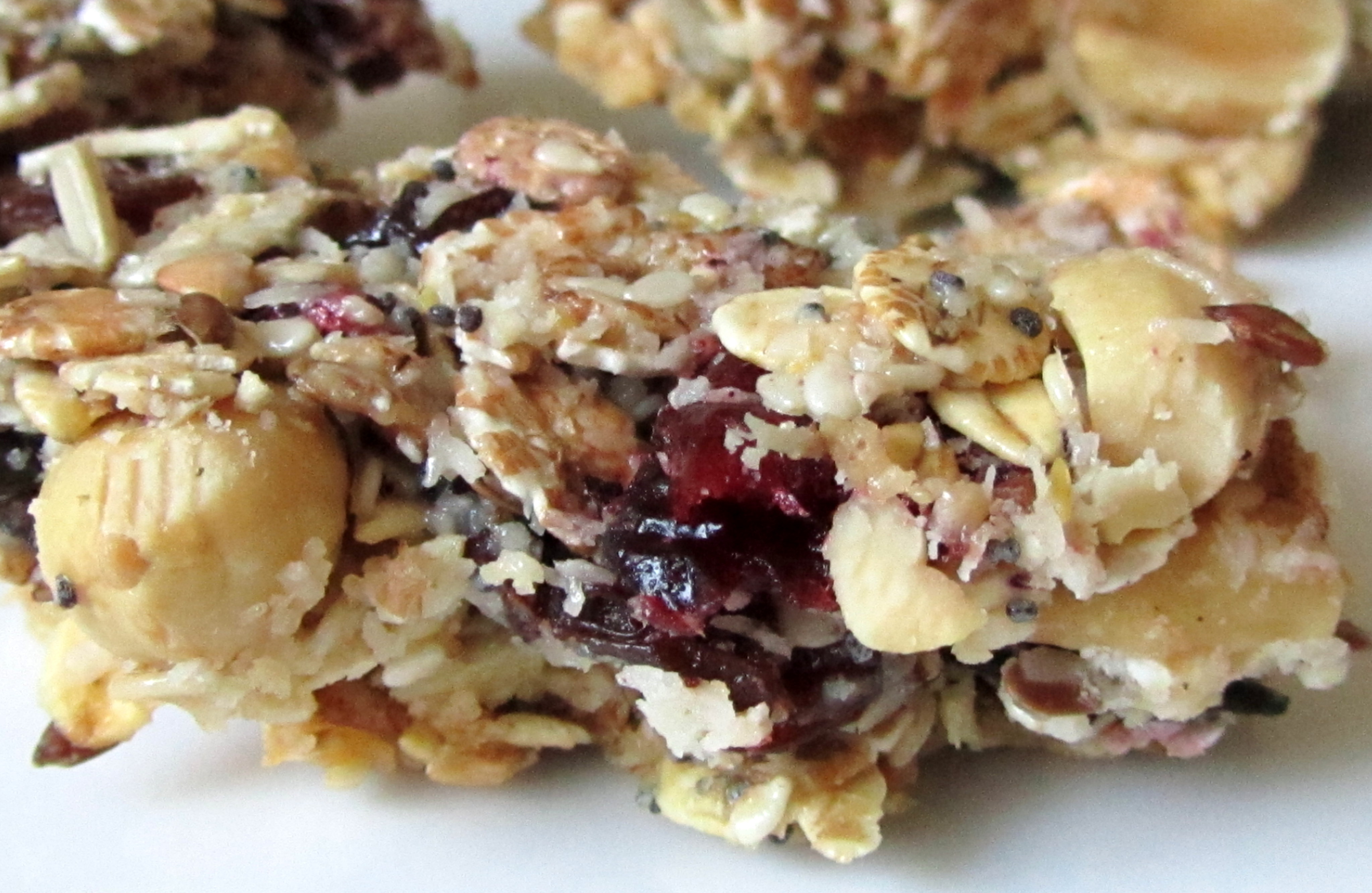
It came to my attention that yesterday, October 1oth, was World Porridge Day. While it is unlikely I’ll post a porridge dish any time soon, I indeed had on archive something that called for oats. It is a super easy recipe of home-made breakfast by Nigella I first saw on Canela moída. I tend to avoid this sort of snacks, no matter how many claims of “healthy food” they have. Most of the times they are too sugary, too chewy, too fatty, too synthetic, too caloric…. But, this home-made one is almost a guilt-less treat, packed with different flavors and textures. A healthy sugar-rush, if you will.
As usual, a few tweaks. Cranberries are difficult to source in this part of world, so I used muesli oats with added fruit. But, this is the type of dish you can do with your favorite ingredients, as long as you keep the proportion of solids and condensed milk the same. It is very quick to do, but it takes about one solid hour to bake and another one to get it cool.
Be warned: once you start doing this, there is no back to the vending machine to get a plastic one.
Breakfast oat bars
Ingredients
- 1 x 397g can condensed milk (=1 tube of condensed milk)
- 350g oats (not instant) with 50% added fruit, including a lot of cranberries (original recipe called for 250g rolled oat and 100g dried cranberries.
- 75g shredded coconut
- 125g mixed seeds (pumpkin, sunflower, sesame)
- 125g natural unsalted peanuts
Method
Preheat the oven to 130°C/gas mark 1/2, and oil a 23 x 33 x 4cm baking tin, or use a throwaway foil one.
Warm the condensed milk in a large pan.
Meanwhile, mix together all the other ingredients and then add the warmed condensed milk, using a rubber or wooden spatula to fold and distribute.
Spread the mixture into the tin and press down with the spatula or, better still, your hands to even the surface. Just make sure you are wearing disposable vinyl gloves to do this, otherwise you will end up with the sticky oats all over your fingers.
Bake for 1 hour, then remove from the oven and, after about 15 minutes, cut into four across, and four down to make 16 chunky bars. Let cool completely
Banana Bread with Walnuts and Chocolate
Posted: October 8, 2011 Filed under: Pastry and Baking | Tags: Banana, Cake, Chocolate, Gordon Ramsay, Nuts, Sugar 2 Comments
An excellent recipe to start of the weekend: banana bread with walnuts and chocolate. I had done it once before, using Bill Granger’s recipe, but this time I decided to give a go Gordon Ramsay‘s take on it. It was definitely a more sophisticated cake, less chocolaty but with more flavors.
Banana Bread with Walnuts and Chocolate Chips
Ingredients
- 150g plain flour
- 150g whole wheat flour
- 1 tsp baking powder
- 1/2 tsp baking soda
- 1/2 tsp fine sea salt
- 170g golden caster sugar
- 75ml vegetable oil
- 2 large free-range eggs
- 150g natural yoghurt
- 1 tsp vanilla extract
- 3 large (or 4 medium) very ripe bananas
- 50g walnuts, chopped
- 50g dark chocolate chips
Method
Preheat the oven to 180C/Fan 160C/Gas 4. Butter and line a 2 litre loaf tin. Mix all the dry ingredients, except for the walnuts and chocolate chip, together in a bowl.
In another bowl, combine the vegetable oil, eggs, yoghurt and vanilla.
Peel and mash the bananas with a fork, then mix into the egg mixture.
Fold the wet ingredients into the dry mixture then quickly fold in the walnuts and chocolate chips. Try not to overmix the batter to ensure a moist loaf. Scoop the batter into the prepared tin.
Bake for about an hour until a skewer comes out clean when inserted into the centre of the loaf. If the bread is not ready, return it to the oven for another 10 minutes. Leave to cool in the tin for 10 minutes before turning out on to a wire rack. Cool completely before slicing and serving.
Red onion, cheese and bacon muffins
Posted: September 30, 2011 Filed under: Pastry and Baking | Tags: Bacon, Cheese, Muffin, Red onions Leave a comment
A totally unhealthy but delicious muffin… Definitely calories worthwhile ingesting. Better if eaten with wine or beer, and a little side salad.
The original recipe was found on Hugh Fearnley-Whittingstall‘s column in The Guardian. As you usual, I had to do a couple of tweaks. If you are novice to muffin baking, just follow his advice. You cannot go wrong…
Red onion, cheese and bacon muffins
Ingredients
- 1 tsp olive oil
- 100g streaky bacon, cut into 1cm pieces
- 1 red onion, finely diced
- 250g flour
- 2 tsp baking powder
- ½ tsp bicarbonate of soda
- ¼ tsp salt
- 2 eggs
- 80g unsalted butter, melted and cooled
- 1 yogurt (the original recipe called for 200ml buttermilk)
- 1 tbsp finely chopped chives (optional)
- 150g gruyere (original recipe called for a strong cheddar)
Method
Heat the oven to 200C/400F/gas mark 6 and line a muffin tin with 12 paper cases.
Warm the oil over a medium heat and fry the bacon in it until just crisp. Lift the bacon from the pan with a slotted spoon and drain on kitchen paper. In the same fat, sauté the onion until just softened, about five minutes, then set aside to cool.
In a large bowl, whisk together the flour, baking powder, bicarbonate of soda and salt. In a jug, whisk the eggs, butter and buttermilk, stir them into the flour mixture with a spatula until just combined, then fold in the cooled bacon, onion, chives, if using, and two-thirds of the cheese until just evenly distributed.
Spoon or scoop the mixture into the muffin tin, sprinkle on the rest of the cheese, and bake for about 18 minutes, until the tops are golden and a toothpick inserted into the centre of a muffin comes out clean.
Anchovy, hard boiled egg and caper on toast (pintxo de anchoas)
Posted: September 28, 2011 Filed under: Eggs, Fish, Snacks | Tags: Anchovies, bread, Spain Leave a comment
In a literal manner, tapa means a cover or lid in Spanish. But, if you are talking about food, a tapa refers to a range of fine appetizers and nibbles that are served in bars and pubs to accompany a glass of wine or beer. Over the years, tapas have evolved into a completely new concept, being now a synonym of miniature dishes – sometimes very sophisticated – which are put together to form a meal. In any case, tapas, or its closely related pintxos and raciones, are the center of informal meals and allow you to focus on chatting and socializing rather than scoffing a full blown dinner.
Even risking sounding a bit pedantic, the dish I am doing today is a pintxo. Traditionally, this combination with anchovies is ubiquitous in the Basque Country. And, you simply are not not served tapas in the Basque Country. Up the there, the pieces of bread with something on top are called pintxos. Incidentally, unlike other parts of the country, you also have to pay for them. In case you wonder, about.com does a excellent job on explaining with great detail and accuracy what is one or the other, and the difference between them.
As of late, I have been kind of missing this sort of flavors from home… A poker night presented itself like the perfect opportunity to give it a go. After googling a bit, I ended up finding this Spanish blogger from Bilbao, whom had a recipe that looked very much like the pintxos de anchoa you can find all over the Basque Country.
Anchovy, hard boiled egg and caper on toast (pintxo de anchoas)
Ingredients
- 150 grs. of cream cheese, like Philadelphia
- 2 tins of salted anchovies
- Sliced bread (I use the equivalent of a French bagette, cut diagonally).
- 2 hard boiled eggs, chopped very finely.
- Capers or sliced gurken
- Olive oil
Method
Put the cheesed and the anchovies (plus its olive oil). Mix well with a blender until you obtain a homogenous mix. Reserve.
Cut the bread crust out, and cut each slice in half so you can obtain 2 rectangles. Fry in a generous quantity of olive oil. Be careful to not let the olive oil overheat to avoid the bread to burn. I was on a hurry this day, and simply toasted the bread until it was crunchy. This version is also less caloric.
Spread a generous quantity of anchovy mix so you obtain a thick layer on top of the bread. Cover with the egg and put a couple of cappers on top of it.
 Lucie Loves Food