Beetroot, apple and walnuts salad with yoghurt and cumin seeds dressing
Posted: October 21, 2013 Filed under: Salad, Vegetarian | Tags: Beetroot, chicory, Nuts, Salad, The Hairy Dieters, Vegetarian, Yoghurt Leave a comment
Beetroots again! It has been while – but here they are again… #Beetrootgate proceeds with a lovely salad of contrasting flavours and different textures. Add a bit of feta cheese for a full meal, perfect for a lunch box.
Beetroot, apple and walnuts salad with yoghurt and cumin seeds dressing (adapted from Dave Myers and Si King’s The Hairy Dieters: How to Love Food and Lose Weight)
Ingredients
- 2 medium cooked beetroots (not pickled), cut into small cubes
- 20g blanched hazelnuts
- 1/2 teaspoon of cumin seeds
- 2 chicory heads, trimmed.
- 2 red apples, like gala
- 1/2 small red onion
- small handful of fresh mint leaves
- small handful of fresh flat leaf parsley
Dressing
- 150g of low fat yoghurt
- the juice and the zest of 1/2 lemon
- 2 teaspoon of runny honey
Method
Slip the beetroots out of their skins. Cut them into wedges and then into cubes
Roughly chop the hazelnuts on a board. Tip them into a colander and give it a good shake until get rid of all the small powdery bits. Reserve the big chunky ones.
Scatter the nuts into a non-stick frying pan and toast over a medium-high heat for about 5min or until lightly browned, turning them as they cook. Add the cumin seeds and toast together for about 1-2min. Remove from the heat and set aside to cool.
Mix the ingredients for the dressing in a bowl.
Cut each head of chicory lengthways into 6 thin wedges and put them in a salad bowl; alternatively you can separate the some leaves. Cut the apple into quarters, remove the core and the slice the apple quarters fairly thinly. Peel and finely slice the onion. Roughly chop the mint and parsley leaves.
Lightly toss the chicory, apple, onion, hazelnuts, cumin seeds and herbs together. Scatter the beetroot on top of the salad and mix gently. Scatter around the dressing to taste
Beef and apple tajine
Posted: October 16, 2013 Filed under: Beef, Pulses and lentils | Tags: Beef, Chickpeas, Hairy bikers, Prunes, Sweet potato, Tajine Leave a comment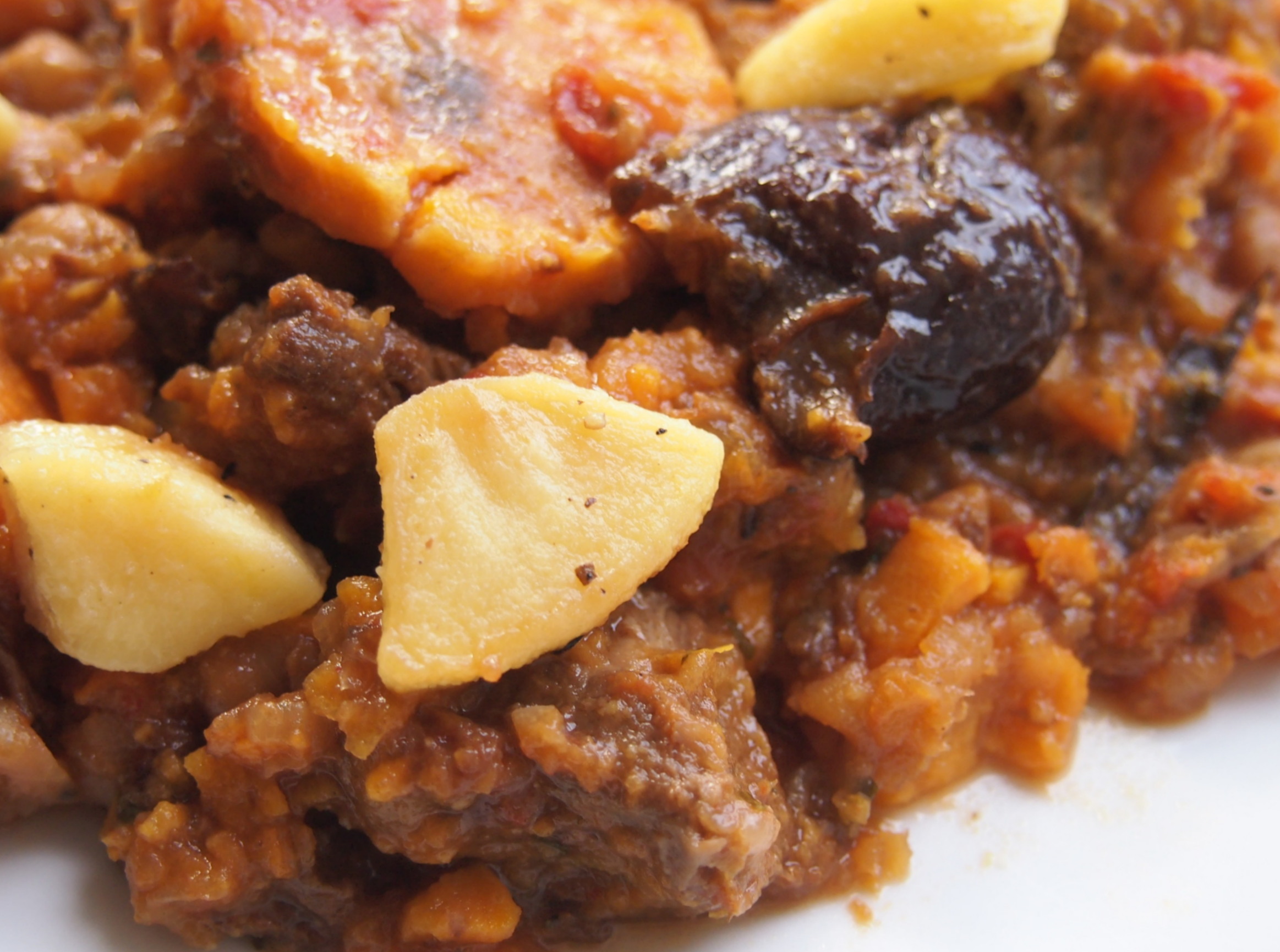
After last Easter’s lamb tajine cook off, it seemed right to give it a try to a different kind of meat, now that Winter is on its way. For the same price, Si and Dave, on their Hairy Bikers version, also got an opportunity redeem themselves from the least favourite tajine of the cook off. It is slow food at it very slowest food. But, the result is a pure comfort food, packed with different flavours and textures, with sweet and spice notes. Perfect for a cold Winter day… A word of warning, though: it is a very heavy and filling dish. Most likely, it is also a caloric bomb…
Beef and apple tajine (adapted from a recipe by Hairy Bikers found in BBC Goodfood)
Ingredients
- 750g of braising steak
- 4 tbsp sunflower oil
- 2 onions, halved and sliced
- 2 garlic cloves, finely chopped
- 2 tsp ground cumin
- 2 tsp ground coriander
- 1 tsp hot chilli powder
- 400g can chopped tomatoes
- 400g can chickpeas, drained and rinsed
- 3 tbsp clear honey
- 1 beef stock cube
- 1 cinnamon stick
- 1 medium sweet potato (around 400g)
- 2 large apples
- 25g bunch fresh coriander
- 75g no-soak dried prunes, halved
- flaked sea salt and freshly ground black pepper
- For the garnish
- 1 large red-skinned apple
- 15g butter
- 1 tbsp clear honey
Method
If not using a tajine, preheat the oven to 180oC.
Trim the beef of any hard fat and cut into roughly 3cm chunks. Season all over with salt and pepper.
Heat one tablespoon of the oil in the tagine (or in a large non-stick frying pan, you are not using the tajine). Fry the beef in three batches over a high heat until lightly browned on all sides, adding a little more oil to the pan when needed. Reserve or transfer each batch to a large flameproof casserole once browned.
Reduce the heat and add two tablespoons more oil to the tajine (or the frying pan). Fry the onions for five minutes, or until softened and lightly coloured, stirring regularly. Add the garlic and sprinkle with the cumin, coriander and chilli powder. Cook for 1-2 minutes more, stirring constantly.
Put the brown meat back to the tajine (or tip the onions and spices into the casserole with the beef). Add about 50ml of cold water to the tagine and mix well to lift the sediment from the bottom. In case you are not using the tajine, add 150mL of water to the frying pan and stir until the sediment is gone. Pour the water into the casserole.
Add about 150mL of water, the tomatoes and chickpeas to the casserole and stir in the honey. Crumble the stock cube over the top, add the cinnamon stick and stir well. Bring to a simmer on the hob, stirring a couple of times. Cover with the tajine and let cook for about 1½ hours. In case you are not using a tajine, you will have to use a bit more water (about 350mL), let it boil. Then cover the dish with a lid, transfer to the oven and cook for 1½ hours.
Ten minutes before the time is up, peel the sweet potato and cut into roughly 2.5cm chunks. Peel the apples, cut into quarters and remove the cores. Cut the apples into 2cm chunks. Trim the coriander and roughly chop half of the leaves.
If you are not using the tajine, carefully take the casserole out of the oven and remove the lid. Stir in the sweet potato, apples, prunes and chopped coriander. Cover once more and return to the oven. If you are using a tajine, just add the remaining ingredients and give it a good stir. In both cases, cook for a further 45-60 minutes, or until the beef is very tender.
To make the garnish, cut the apple into quarters and remove the core. Slice each apple quarter lengthways into five. Season with ground black pepper. Melt the butter in a large non-stick frying pan and fry the apple slices over a high heat for 3-4 minutes, or until lightly browned, turning occasionally. Remove from the heat, drizzle with the honey and toss lightly.
Scatter the fried apples over the tajine in the casserole, scatter with roughly chopped coriander and serve.
Roasted sweet potatoes and fresh figs in a reduction of balsamic
Posted: October 11, 2013 Filed under: Fruit, Salad, Uncategorized, Vegetarian | Tags: Fruit, Middle East, Salad, Sweet potatoes, Yotam Ottolenghi Leave a comment
Apparently, it is one of the most popular Yotam Ottolenghi’s recipes – and rightly so…. A few tweaks to the recipe, though. Onions were replaced by leeks as one of the mobile calorie intake units guests is allergic to it. Fresh figs were replaced my dried ones, due to sourcing and budgetary constraints. Probably not the dish Yotam envisioned, but still… it is a pretty good way to start your Autumn.
Roasted sweet potatoes and fresh figs in a reduction of balsamic (adapted from Yotam Ottolenghi and Sami Tamimi‘s Jerusalem)
Ingredients
- 4 small sweet potatoes (1 kg in total)
- 5 tbsp olive oil
- 40ml balsamic vinegar (you can use a commercial rather than a premium aged grade)
- 20g caster sugar
- 3 leeks halved lengthways and cut into thin slices
- 1 red chilli, thinly sliced
- 250g of dried figs, sliced
- Maldon sea salt and black pepper
Method
Preheat the oven to 240oC/220oC Fan/Gas Mark 9.
Wash the sweet potatoes, halve them lengthways and then cut each again similarly into three long wedges. Mix with three tablespoons of the olive oil, two teaspoons of salt and some black pepper. Spread the wedges out on a baking sheet, skin-side down, and cook for about 25 minutes until soft but not mushy. Remove from the oven and leave to cool down.
To make a balsamic reduction, place the balsamic vinegar and sugar in a small saucepan. Bring to a boil then reduce the heat and simmer for 2–4 minutes, or until it thickens. Be sure to remove the pan from the heat when the vinegar is still runnier than honey; it will continue to thicken as it cools.
Stir in a drop of water before serving if it does become too thick to drizzle. Arrange the sweet potatoes on a serving platter.
Heat the remaining oil in a medium saucepan and add the spring onions and chilli. Fry on a medium heat for 4–5 minutes, stirring often, making sure not to burn the chilli, and then spoon the oil, onions and chilli over the sweet potatoes.
Dot the figs among the wedges and then drizzle over the balsamic reduction. Serve at room temperature.
Brined pork tenderloin with lemon and rosemary
Posted: October 6, 2013 Filed under: Pork | Tags: Herbs, Lemon, Pork, Roast, Thomas Keller 1 Comment
A tribute to my rosemary plant, who sadly passed away after 4 years of loyally providing springs for many different dishes It was a very long Winter and… sadly, it just gave up waiting for the sun and the good weather, leaving a big empty to fill in my kitchen. I got it as a birthday present and, in the meanwhile, a lot had happened. It made my company during many hours of happy and unhappy moments, inspired and uninspired cooking, every day and festive meals… Dishes like this chestnut with rosemary pesto, this roasted chicken or this fish wrapped in ham, to mention a few. How to better to celebrate her life but to use it in a Thomas Keller dish?
Brined pork tenderloin with lemon and rosemary (adapted from Thomas Keller‘s Ad hoc at home)
Ingredients
For the brine
- 85g honey (app 1/4) cup + 2 tablespoons honey
- 12 bay leaves
- 3 fresh rosemary springs
- bunch of fresh thyme sprigs (about 15g)
- bunch of fresh flat leaf parsley springs (about 15g)
- 12 cloves garlic, crushed with the skin left on
- 2 tablespoon black peppercorns
- 150g salt
- 2L water
For the pork
- 2 pork tenderloin, silverskin removed
- Olive oil to taste
- salt & pepper
- 2 tablespoons unsalted butter
- 2 garlic clove, crushed
- 6 fresh thyme sprigs
- 2 fresh rosemary spring
- 8 slices cured lemon slices
- sea salt
Method
Combine all the ingredients for the brine in a big pot, cover and bring to boil. Stir and let it boil until the salt is dissolved. Remove from the heat and let it cool completely.
Put the pork tenderloin and brine in a bowl just big enough to hold them. Let sit in the fridge for 4 hours. Be careful about the time – otherwise the pork will be too salty.
Remove the pork from the brine, discarding the liquid. Rinse it & pat the meat until dry. Let the pork rest at room temperature for about half hour.
In the meanwhile, preheat oven to 175oC/350 F.
Heat the olive oil over medium-high heat in a large frying pan until piping hot. Season the tenderloin for salt and pepper, add them to pan and sear until golden brown in all sides (about 6min).
Add the butter, garlic, thyme, rosemary and lemon slices. Let it cook for another 2min, tilting the pan and using a spoon to baste the pork with the pan juices. r two minutes basting the herbs, lemon & garlic with the juices in the pan.
Transfer the pork to a roasting pan with a rack set in it. Overlap the lemon slices down the length of the tenderloin, overlapping them a little. Top with the thyme, rosemary and garlic. Roast for 20 minutes, until the core of the pork is between 60oC-65oC. Remove from the heat and let it rest for 15min (it should be medium-rare to medium).
Slice the pork in diagonal unto 1 to 3cm thick slices. Arrange the slices on a serving platter and garnish with the garlic, rosemary and salt.
Lemon pudding cake with berries
Posted: October 1, 2013 Filed under: Dessert, Fruit | Tags: Baking, Berries, Cake, Dessert, Fruit, Sugar Leave a comment
To keep up with the spirit of seasonal cooking, a lemon pudding cake with raspberries… Only one word to describe this: yum. Too bad soon enough berries will be gone from the supermarket…
Lemon pudding cake with berries (adapted from Bill Granger‘s Easy)
Ingredients
- Enough berries to cover the bottom of a tray (about 250g)
- 75g of plain flour
- 2 teaspoons baking powder
- pinch sea salt
- 300mL buttermilk
- 125g unsalted butter (melted and cooled down)
- 3 eggs separated
- 150g caster sugar
- 2 teaspoons finely grated lemon zest
Method
Preheat the stove to 180oC
Grease a 750mL to 1L baking dish. Make sure this dish fit fits larger tray, so you can have a bain marie. Scatter the berries over the base of the greased dish, making sure the whole surface is covered
Combine in a large bowl the flour, baking powder and pinch of salt.
In another bowl, lightly whisk together the melted butter, the buttermilk, the yolks, the sugar and the lemon zest.
Stir into the flour mixtures
Beat the egg whites until stiff peaks forms
With a metal spoon, fold in the batter half of the egg whites until well incorporated. Then, fold in the remaining half.
Spread the batter over the berries in the baking dish.
Put the baking dish in the large baking tray. Poor boiling water in the larger dish until it reaches halfway up the sides, creating a main marie.
Transfer to the stove for about 45m to 1h, until it starts to get fluffy and golden (it should be cakey on the top and soft in the middle).
Let it cool for a bit and serve.
Pear and fennel salad with caraway and pecorino cheese
Posted: September 26, 2013 Filed under: Salad, Vegetarian | Tags: Cheese, Pear, Salad, Vegetarian, Yotam Ottolenghi Leave a comment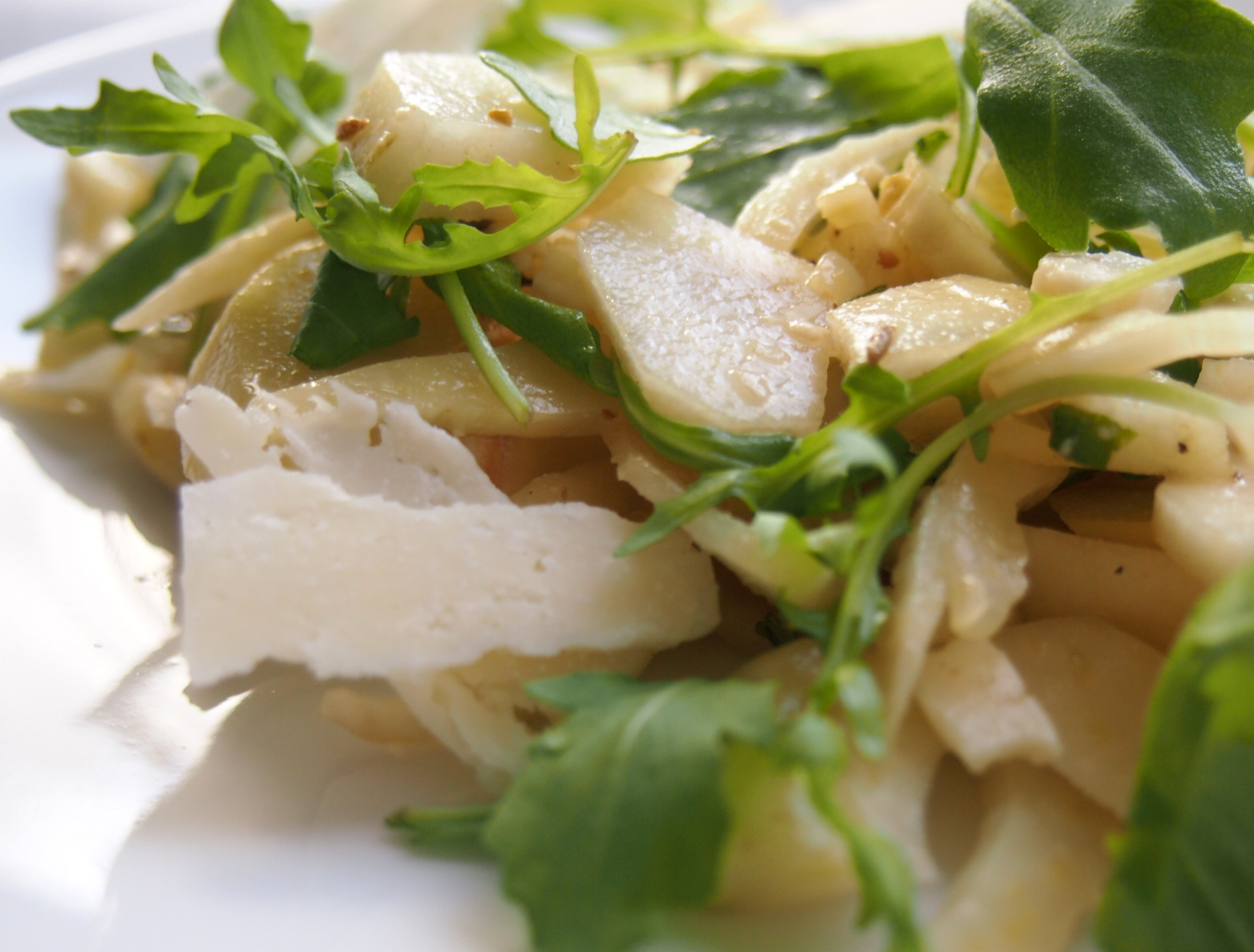
From an off-season salad to a totally in season one, courtesy of Yotam Ottolenghi. It seems an odd combination of flavours, but they really go well together: the anise flavor of the fennel, sweetness of the pears, the saltiness of the cheese, the freshness of the lemon, the bitterness of the rucola…. It could well be one of the dishes of this Autumn (minus pecorino cheese, for a sensible calorie count).
Pear and fennel salad with caraway and pecorino (adapted from Yotam Ottolenghi’s column in The Guardian)
Ingredients
- 3 tbsp lemon juice
- 1 tbsp sherry vinegar
- 1 large fennel bulb, cut in half lengthways, then each half cut sideways into 2mm slices
- 2 tbsp olive oil
- 1½ tsp caraway seeds, toasted and lightly crushed
- 1 tsp maple syrup
- Salt and black pepper
- 10g picked dill
- 75g rocket
- 3 medium ripe conference pears, peeled, quartered lengthways, cored and cut into 0.5cm wedges
- 60g pecorino, thinly shaved
Method
Mix the lemon juice and vinegar in a large bowl. Add the fennel and leave to soften for about 45 minutes, stirring from time to time.
Put the oil, caraway, maple syrup, a quarter-teaspoon of salt and some black pepper into a small bowl, strain in the lemon and vinegar from the fennel bowl and stir well.
Add the dill, rocket, pear and pecorino to the fennel bowl, pour on the dressing, toss lightly and serve.
Melon, cucumber and courgette salad with olives
Posted: September 23, 2013 Filed under: Salad, Vegetarian | Tags: Courgette, Hu, Melon, olives 2 Comments
Melons are now totally off season, but it is still worthwhile to post this super light, super healthy and super refreshing little salad. It was the best Summer dish * ever *… Too bad I couldn’t do it more ofter.
Melon, cucumber and courgette salad with olives onion (adapted from Hugh Fearnley-Whittingstall column in The Guardian)
Ingredients
- ½ large cucumber (about 200g, deseeded and cut in half moon slices about 2mm thick)
- 1 medium courgette (about 200g, cut into 2mm thick slices)
- ¼ small charentais or galia melon (about 200gm sliced as above)
- 50g pitted black olives, chopped as above
- Juice of ½ small lemon
- 2 tbsp extra-virgin olive oil
- Sea salt and freshly ground black pepper
Method
Quarter the cucumber lengthways, scoop out the seeds with a teaspoon and slice into thin quarter-moons about 2mm thick. Put the slices in a large bowl.
Top and tail the courgette, quarter it lengthways and cut into pieces the same thickness as the cucumber. Add to the bowl.
Scoop the seeds out of the melon. Carefully slice the melon off its skin, then cut it first lengthways into two to three slender wedges, then crosswise, as with the cucumber and courgette. Add to the bowl.
Roughly chop the olives and add to the salad.
Squeeze over the lemon juice, trickle over the oil, give it a good seasoning and stir together gently. Taste, add more salt, pepper or lemon juice if needed, and serve straight away
Baked salmon with an orange chilli ginger sauce
Posted: August 22, 2013 Filed under: Fish, Fruit | Tags: Ginger, Orange, Salmon, The Hairy Dieters Leave a comment
In one word: yum. And I am not even such a big fan of salmon… It was probably one of the most cooked dishes of this year, together with the fennel orange salad. It was quite hard to explain that indeed this is supposed to be diet food and that indeed there was no added fat in this dish
Baked salmon with an orange chilli ginger sauce (adapted from Dave Myers and Si King’s The Hairy Dieters: How to Love Food and Lose Weight)
Ingredients
- 2 ball stem ginger in syrup, sliced into matchstick strips
- 2 tablespoons of ginger syrup
- 1 clove garlic, thinly sliced
- 2 tablespoons dark soy sauce
- finely grated zest of 1 orange
- freshly squeezed juice of 1 orange (about 150mL)
- 1 fresh red chilli, thinly sliced (or flaked dried chillis)
- 2 x salmon fillets, skin on (about 300g each)
- freshly ground black pepper
Method
In a bowl large enough to hold both slices of salmon, mix the sliced ginger and garlic with the ginger syrup, the orange juice and the soy sauce. Add in the orange zest and the freshly ground the black pepper. In case you cannot source the ginger in syrup, fresh ginger can nicely replace it. In this case, add a couple of tablespoons of unrefined sugar.
Put the salmon in the bowl with the marinade. Turn a couple of times, ending with the fish skin side up. Cover and let it sit in the fridge for about 30 minutes.
Preheat the oven to 220oC. Line a small baking tray with baking parchment. Take the salmon fillets out of the marinade, scraping off any bits and pieces, and place them on the tray, skin side down. Season with more ground black pepper. Bake for 12 – 15 minutes, depending on the thickness of the salmon.
Meanwhile prepare the sauce. Pour the marinade into a tiny non-stick pan and bring to the boil. Cook for 6 minutes or until the liquid has reduced to half and the garlic is softened.
Put the salmon fillets on warm plates and spoon over with the sauce. Be careful not to damp the fish with the sauce. Serve immediately.
Quinoa pancakes with blueberries
Posted: August 17, 2013 Filed under: Grains, Vegetarian | Tags: Brunch, pancakes, Quinoa 2 Comments
Allow me a brief interruption of the regular programming of this blog, for a super * gasp * healthy creation made with not one, but two * gasp * super foods and barely any fat or sugar * gaps *. It also tastes good. Actually, very good indeed., This is what I have for breakfast as of late. I just cook a batch, keep them in the fridge wrapped on tin foil and grab one to eat on the go; it keeps me running for the whole morning (plus a few double expressos). I know that eating quinoa might be controversial, but…. truth to be said, I like its flavour and texture. And, it is good for you.
Quinoa pancakes with blueberries (adapted from Popsugar Fitness and Martha Stewart)
Ingredients
- 1 cup of cooked quinoa (about 100g)
- 3/4 cup all-purpose flour (about 70g)
- 2 teaspoons baking powder
- 1/2 teaspoon salt
- 2 eggs
- 1 tablespoon unsalted butter, melted, plus more for skillet
- 1/4 cup low-fat milk (about 60 mL)
- 2 tablespoons maple syrup, plus more for serving
- Blueberries and maple sirup to serve (or any fresh fruit or quark)
Directions
In a medium bowl, whisk together the quinoa, flour, baking powder and salt. In another medium bowl, whisk together the 2 eggs, butter, milk, and syrup until smooth. Add the egg mixture to the flour mixture and whisk to combine.
Lightly coat a large non stick frying pan with butter and heat over medium-high. Drop the batter by heaping tablespoonfuls into skillet. Cook until bubbles appear on top, approximately 2 minutes.
Flip cakes and cook until golden brown on the underside, about 2 minutes. Wipe the frying pan with a paper towel and repeat with more melted butter and remaining batter (reduce the heat to medium if it starts to brown).
Serve with maple syrup and fresh fruit or preserves if desired.
Apricot, walnut and lavender cake
Posted: August 12, 2013 Filed under: Dessert, Fruit, Pastry and Baking, Vegetarian | Tags: Almonds, Apricots, Cake, Chestnuts, lavender, Sugar, Summer, Yotam Ottolenghi 5 Comments
It was love at first sight. And, timing couldn’t have been better. I was just looking for my annual super baking project when I bumped into this recipe. It was so delicious, I will have to bake it again. And again… and again. Never mind the Modern Art Cakes – this the one I want I want for my birthday. Truth to be said, it is not particularly difficult dish. But the flavours, oh!, the flavours…. It were layers upon layers of fresh, summery and nutty flavours, each mouthful different.
Apricot, walnut and lavender cake (adapted from Yotam Ottolenghi’s column in The Guardian)
Ingredients
- 185g unsalted butter, diced and at room temperature
- 2 tbsp walnut oil
- 220g caster sugar
- 120g ground almonds
- 4 medium eggs, beaten
- 120g ground walnuts
- 90g plain flour
- ½ tsp vanilla extract
- Grated zest of 1 lemon
- 1½ tsp picked lavender flowers, fresh or dry
- Salt
- 600g (gross) apricots, halved and stones removed
For the icing
- 50g icing sugar
- 1 tbsp lemon juice
Method
Heat the oven to 170C/335F/gas mark 3. Put the butter, oil, sugar and almonds in the bowl of a mixer and beat on a medium-high speed until light and fluffy. Add the eggs bit by bit, making sure each addition is well incorporated before beginning the next, then fold in the walnuts, flour, vanilla, lemon zest, a teaspoon of lavender flowers and an eighth of a teaspoon of salt.
Line the base and sides of a 23cm cake tin with greaseproof paper. Pour in the cake mix and use a palette knife to level it out. Arrange the apricot halves skin side down and slightly overlapping all over the top of the cake, taking them right to the edge.
Bake for 70-80 minutes – cover with foil if the top starts to brown too much; also, note that when you insert a skewer to test for doneness, it will come out a little sticky because of all the moisture in the apricots.
While the cake is baking, whisk together the icing sugar and lemon juice until you have a light, pourable icing (adjust the amount of sugar or juice slightly, to suit your tastes). As soon as the cake is cooked, remove from the oven and brush the icing all over the top. Sprinkle over the remaining lavender flowers and set aside to cool.
 Lucie Loves Food