Coconut cake
Posted: August 25, 2012 Filed under: Dessert, Pastry and Baking, Vegetarian | Tags: Cake, Coconut, Sugar, Thomas Keller 1 Comment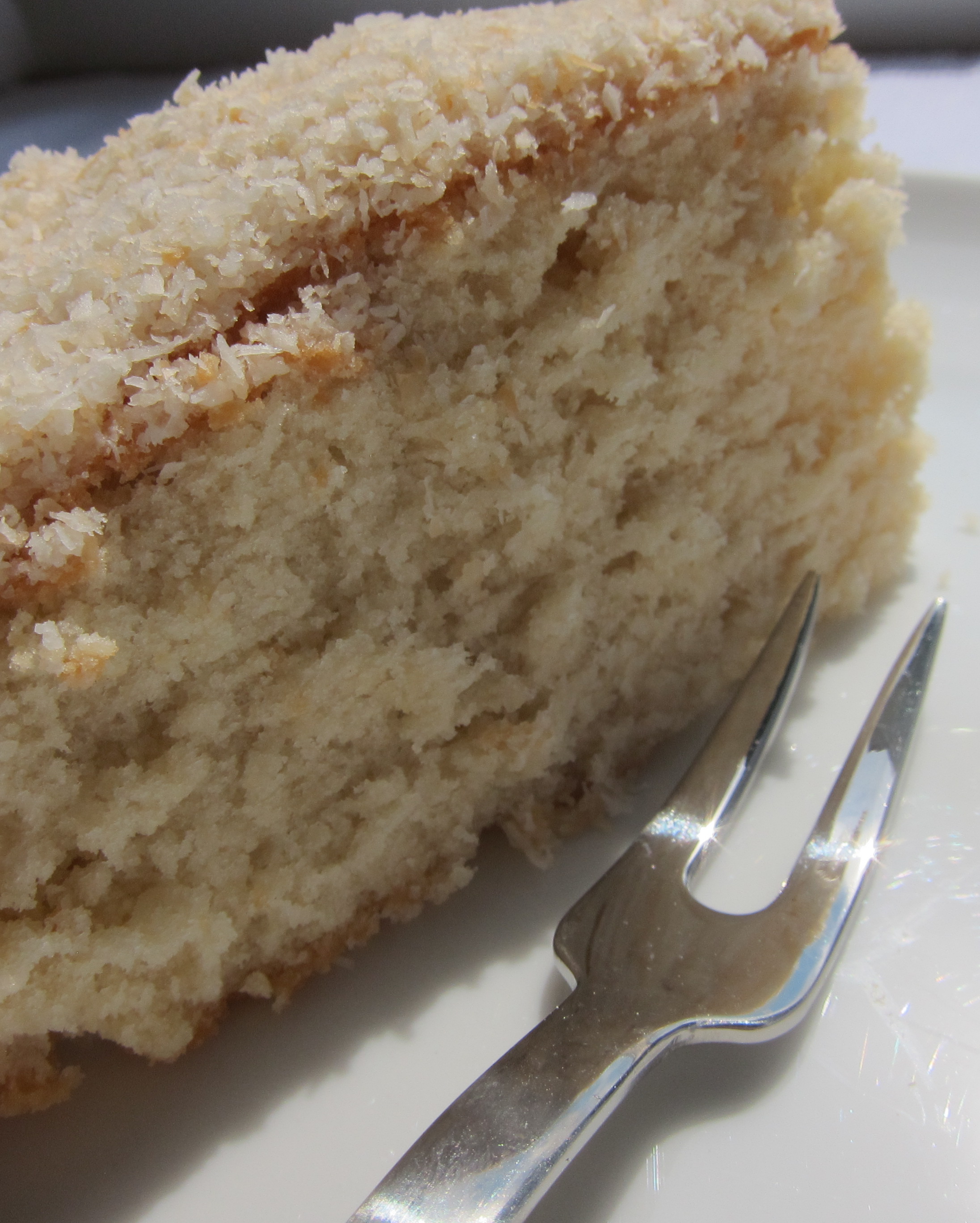
Not my birthday cake, but close enough… G. and I share the same birthday, and it has become sort of a tradition to have a dinner party around this time of the year. After agonizing for a couple of days what I would be baking for the occasion, I ended up seeing this one on Thomas Keller‘s Ad hoc at home. It was just not the flavors which caught my attention – there was also a very nice story attached to it. And, having read this was a very dear cake to him, I decided to go for it in less than heartbeat. Let me warn you, it is not an easy dish. But, it is so rich and velvety you end up forget all the cooking efforts once you start eating it.
In case you were wondering what sort extravaganza cake I baked this year, the answer is not 42… I actually let myself be (very) spoiled my dear Zurich friends. All I can say is that it was chocolate, it was rich and it was dense. Very dense… which is always a good thing when it comes to chocolate.
Coconut cake (adapted from Thomas Keller‘s Ad hoc at home)
Ingredients
- 500mL of coconut milk
- 1 1/2 teaspoons pure vanilla extract
- 380g of flour
- 1 tablespoon baking power
- 3/4 teaspoon of salt
- The whites of 6 large eggs
- 400 granulated sugar
- 180g of unsalted butter at room temperature
- 2 cups of drie shredded coconut
- Sugar syrup (3 parts of water to 1 part of sugar).
Method
1.Pre heat the oven to 180oC (=350oF). Coat a baking tray with baking spray (or butter and flour).
2.Prepare the coconut-vanilla mixture. Put the coconut milk a small pan and whisk to blend. Bring to a gentle simmer, keeping on whisking until most the water has evaporated. You should have the equivalent of 1 cup. Remove from the heat and let it cool down. When the coconut is at room temperature, add the vanilla extract and mix well.
3. Prepare the dry ingredients mix. Sift the cake flour and the baking powder. Stir in the salt and put aside.
4. Prepare the white egg sugar mixture. Whip the whites with a whisker until they begin to froth. Slowly add 150g of sugar and whisk you see medium peak forming. (the whisker should be put to slow when you start adding the sugar, and then put to medium-high). Put aside.
5. Prepare the butter and sugar mix. Put the butter on a bowl and mix with a paddle at medium-low speed until it starts to soften. Add the remaining sugar. Mix until it is light yellow and fluffy.
6. Mix the dry ingredients, the butter and coconut mix. It is not important not to over mix the batter. Each addition doesn’t have to be completely incorporated before you add the next. Add half the dry ingredients and mix; then add half the coconut mix and incorporate it. Start all over again: half of the remaining dry ingredients, then the coconut milk. Repeat with what is left. Make sure you mix the bottom of the bowl.
7. Gently fold in the egg whites (1/3 of it at a time).
8.Put batter in the baking tray and gently smooth the type. Put in the oven for about 30min, and check with the skewer if it done. When the skewer comes out of cake dry, take the cake and let it cool down for about 10min before you remove it from the baking tray. Let it cool completely.
9. Meanwhile spread the coconut on a baking sheet and toast lightly – about 6 to 8min. Let it cool down.
10. Start working on the sugar syrup. In a sauce pan, mix the sugar with the cold water and put to boil. Stir constantly until the sugar dissolves completely and the mixture is clear (app 3min).
11. Once the cake is cool, brush all the surfaces with the sugar syrup. Sprinkle with the roasted coconut.
Spinach and cheese parcels (empanada de espinacas y queso)
Posted: April 22, 2012 Filed under: Pastry and Baking, Vegetables, Vegetarian | Tags: Carlos Horrillo and Patrick Morcas, Cheese, Spain, spinach Leave a comment
Once I got the empanada de atun [savoury tuna parcels] properly tested and under control, I decided to expand to other combinations. Not knowing where to start, I turned to Carlos Horrillo and Patrick Morcas, whom seemed to favor spinach, cream cheese and spinach. If it is good enough for Patrick and Carlos, it is also good enough for me…. I am actually quite fond of spinach, which helped a bit my decision. Of course, living in Switzerland, the Cheddar in the original recipe had to be replaced by Emmentaler. No one noticed seemed to complain – if anything it conformed better to the taste of hardened expats living in Switzerland for longer than they want to admit. All in all, a great dish to serve when the occasion requires food easy to eat or informal gatherings. For bonus, it is vegetarian and all the greenies make it look a bit more healthy than its tuna fish counterpart. Eat warm or cold, with a beer or a glass of red wine.
Spinach and cheese parcels (empanada de espinacas y queso, adapted from Carlos Horrillo and Patrick Morcas’ Tapas: Simple Flavours, Striking Combinations)
Ingredients
- 2 packets ready of read-rolled puff pastry (one for the bottom, the other to cover it)
- 800g of fresh spinach, washed
- 100g of full fat creamy cheese, like Philadelphia
- 100g of grated Emmentaler cheese
- Salt and pepper
- Olive oil
- 1 slightly beaten egg
Method
1. Coat the bottom of a heavy bottom non sticky pan with olive oil and put it on high heat, until the olive oil is smoking hot.
2. Drop the the spinach leaves inside, season whit salt and turn the leaves until they start to wilt.
3. Transfer the leaves to sieve lined with kitchen paper, so it absorbs the bitter liquids.
4. Allow to cool, and put them in a large mixing bowl.
5. Add both cheeses to the spinach and mix everything together until it is homogenous.
6. Allow to cool overnight in the fridge
7. Heat the oven to 200 oC
8. Line the bottom and walls of the rectangular baking tray previously buttered. Pinch it with a fork and fold in the e spinach and cheese mixture.
9. Put the second sheet of puff pastry on top, and close the edges trimming the excess pastry. Seal with the beaten egg. You can brush the whole surface to look shiny.
10. Leave in the stove for about 20m (or according to the instructions), until the pastry is done.
Savoury tuna parcels (empanadillas de atún)
Posted: January 21, 2012 Filed under: Fish, Pastry and Baking | Tags: Carlos Horrillo and Patrick Morcas, Finger food, Pastry, Snack, Spain, Tomato, Tuna fish 3 Comments
Another Spanish classic… Very much like the tortilla de patatas [potato omelette], there are many versions and interpretations. And, as you might guess from previous posts, the best empanada is going to be the one cooked by the proverbial Mother-in-Law… Actually, at some point, I had scribbled down a recipe that had been in someone’s family for generations. But hélas!, I lost it during one of my many moves. I ended up to use the one Carlos Horrillo and Patrick Morcas have on their Tapas: Simple Flavours, Striking Combinations book.
All in all, it is not exactly easy to get this dish right. The filling is relatively straightforward, but the pastry requires a certain level of skill and commitment. Although this might sound like scratching a chalkboard with nails to some, I ended up using pre made pastry, to avoid any culinary catastrophes… In any case, it is an awesome combination of flavors and textures, which reminds me of home and many bohemian nights out.
Savory tuna parcels (empanadillas de atún)
For the filling
- Olive oil
- 2 medium onions finely sliced
- 1 large red pepper, finely chopped
- Salt and black pepper to taste
- 225g tomatoes coarsely chopped
- 350g of good quality tuna (in olive oil), drained
- 8-10 good quality black 0lives, stones removed
- Small pinch of saffron strands. soaked in 2 tablespoon hot water
For the pastry
- pack of ready rolled puff pastry
- 1 beaten egg
Method
Place a large heavy base, non stock frying pan (or wok) on a low heat with 8 dashes of olive oil. Add the sliced onions and pepper, a pinch of salt and pepper then sauté gently until soft and tender.
Add the chopped tomatoes and give everything a good stir, then simmer gently until all the ingredients have reduced to a thick sauce.
Add the tuna, olives, saffron and another pinch of salt and pepper, Summer everything together, stirring regularly until you have a tick, rich sauce. Set aside to cool, and then refrigerate for 2 hours.
Preheat your oven to 200oC/400oC/gas mark 6
Lightly flour your work surface and place the rolled puff pastry on top. Using a sharp knife, cut the pastry into 12cm squares and arrange them on several greased baking sheets. You will need 8-12, depending on how many people you are going to serve. Gauge it so you have enough pastry to wrap the filling. If the pastry is too thin the parcel will burst and all the ingredients will spill out. Some spillage is fine. If the pastry is too thick, it will not allow the flavours of the filling to come through.
Put a dollop of the tuna mixture, a ball shape roughly 5-6cm, in the middle of the square, and then dab the edges of the suare with eaten egg, Bring up the corners of the pastry to the centre and press them together to form a peak at the top. Glaze the tops with beaten egg, and then in the oven for 20min, or until golden brown. Serve hot, warm or cold.
Alternatively, you can put the pastry in the a rectangular or square baking tray, allowing the wall to be coated about 5cm. Put the tuna mixture on it, and put another sheet of pastry on top. Close the edges, sealling with beaten egg. Glaze the top with beaten egg.
Pear and almond tart, take 2
Posted: January 17, 2012 Filed under: Dessert, Pastry and Baking | Tags: Almond, Baking, Cake, Pastry, Pear, Sugar 2 Comments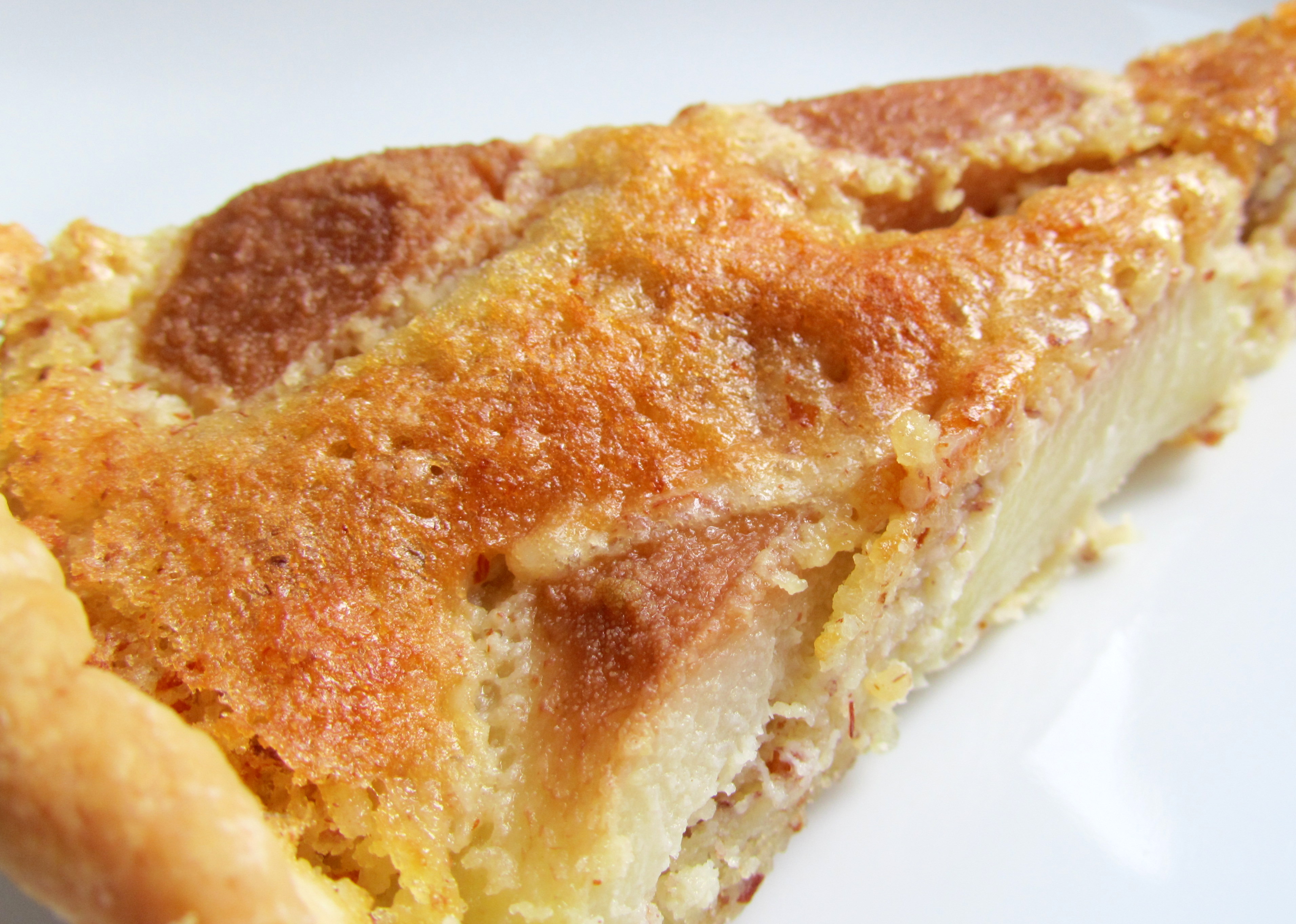
A Food&Travel dish I found on tram 11, back by popular demand. And, again, many happy testers….
As I was in a bit of a hurry, I used pre-made pastry.
Pear and almond tart
Ingredients
For the pastry
- 200g plain flour
- 2 table spoons caster sugar
- 100g cold unsalted butter cut into pieces
- a pinch of salt
For the almond cream
- 100g unsalted butter
- 100g sugar
- 2 eggs
- 100g ground almonds
- 2 table spoons flour
- 3-4 ripe pears
Method
To make the pastry, put the flour, sugar, butter and salt in a food processor, and, using the pulse button, process until the butter is broken down (about 5-10 pulses). Add 3 tablespoons of cold water, and pulse just until the dough forms coarse crumbs; add one more tablespoon of water if necessary, but do not do more than 10 pulses. Transfer the pastry to a sheet of backing parchment, form into a ball and flatten to a disk. Wrap in the paper and let stand for 30-60 minutes.
Roll out the pastry to the diameter of the baking tin (a tarte tatin or other round flame proof baking dish). Turn the tin upside down and on the rolled out pastry and press down and trace around the edge with a sharp knife.
Alternatively, just use pre made pastry. It might not be so good, but it does the trick.
Preheat the oven the 200oC. Prick the pastry all over, line with baking parchment, and fill with baking weights. Bake for 15min, then remove the paper and weights (I used beans), and bake for 10-15min more, until just golden. Let the tart shell cool slightly before filling.
To make the almond cream, put the butter and sugar in a bowl and mix with the electric mixer, until fluffy and lemon coloured (it takes some time and patience. I start with melted butter). Beat in the eggs one at a time. Using a spatula, fold in the almonds and flour until well mixed.
Preheat the oven to 190oC. Spread the almond cream evenly in the tart shell. Peel and core the pears, and slice into 8-12 pieces, depending on the size of the fruit. Arrange the pear slices on top of the almond cream. Bake for about 20-30min, until puff and golden. Serve warm.
Mandarin orange coconut cake
Posted: December 15, 2011 Filed under: Dessert, Pastry and Baking | Tags: Baking, Cake, Coconut, Food blogger recipe, Mandarin orange, Sugar Leave a comment
For obscure reasons I was not able to find out, in Switzerland tradition include giving bags of mandarin oranges, peanuts and a few chocolates. The kind of thing you might get at office or from a distant relative…. I was looking for a Christmassy dish, when I saw this on Cinco Quartos de Laranja who had seen it on All Recipes and then tweaked it a bit. By a happy coincidence, I actually had way too many mandarin oranges on the fruit bowl, a tiny bit of coconut in my cupboard and just enough time to bake it. And, voila!, a Christmassy and at the same time fresh and casual dish. Actually, it is also delicious and light, with different flavors and textures in each bite. An excellent way of fooling kiddies into eating their daily dose of citrus.
Mandarin orange coconut cake
Ingredients
- 200g flour and 1 spoon of baking powder, sifted
- 175g sugar
- 170g unsalted butter
- 150mL of mandarin orange juice
- The zest of 3-4 mandarin oranges
- 30g dry powdered coconut
Method
Preheat the oven to 180C. Coat a baking tray with baking spray (or butter and flour)
in a large bowl, beat the butter and the sugar until light and pale yellow.
Add the egg one at a time, beating for 1 minute after each addition.
Fold in the flour and mix well. Once it is well mixed, add the coconut, the mandarin orange juice and zest. Mix until the mixture is uniform.
Put the cake tin in the preheated oven. Bake the cake until golden brown and a toothpick inserted in the middle comes out clean (about 30min)
Banana Bread with Walnuts and Chocolate
Posted: October 8, 2011 Filed under: Pastry and Baking | Tags: Banana, Cake, Chocolate, Gordon Ramsay, Nuts, Sugar 2 Comments
An excellent recipe to start of the weekend: banana bread with walnuts and chocolate. I had done it once before, using Bill Granger’s recipe, but this time I decided to give a go Gordon Ramsay‘s take on it. It was definitely a more sophisticated cake, less chocolaty but with more flavors.
Banana Bread with Walnuts and Chocolate Chips
Ingredients
- 150g plain flour
- 150g whole wheat flour
- 1 tsp baking powder
- 1/2 tsp baking soda
- 1/2 tsp fine sea salt
- 170g golden caster sugar
- 75ml vegetable oil
- 2 large free-range eggs
- 150g natural yoghurt
- 1 tsp vanilla extract
- 3 large (or 4 medium) very ripe bananas
- 50g walnuts, chopped
- 50g dark chocolate chips
Method
Preheat the oven to 180C/Fan 160C/Gas 4. Butter and line a 2 litre loaf tin. Mix all the dry ingredients, except for the walnuts and chocolate chip, together in a bowl.
In another bowl, combine the vegetable oil, eggs, yoghurt and vanilla.
Peel and mash the bananas with a fork, then mix into the egg mixture.
Fold the wet ingredients into the dry mixture then quickly fold in the walnuts and chocolate chips. Try not to overmix the batter to ensure a moist loaf. Scoop the batter into the prepared tin.
Bake for about an hour until a skewer comes out clean when inserted into the centre of the loaf. If the bread is not ready, return it to the oven for another 10 minutes. Leave to cool in the tin for 10 minutes before turning out on to a wire rack. Cool completely before slicing and serving.
Red onion, cheese and bacon muffins
Posted: September 30, 2011 Filed under: Pastry and Baking | Tags: Bacon, Cheese, Muffin, Red onions Leave a comment
A totally unhealthy but delicious muffin… Definitely calories worthwhile ingesting. Better if eaten with wine or beer, and a little side salad.
The original recipe was found on Hugh Fearnley-Whittingstall‘s column in The Guardian. As you usual, I had to do a couple of tweaks. If you are novice to muffin baking, just follow his advice. You cannot go wrong…
Red onion, cheese and bacon muffins
Ingredients
- 1 tsp olive oil
- 100g streaky bacon, cut into 1cm pieces
- 1 red onion, finely diced
- 250g flour
- 2 tsp baking powder
- ½ tsp bicarbonate of soda
- ¼ tsp salt
- 2 eggs
- 80g unsalted butter, melted and cooled
- 1 yogurt (the original recipe called for 200ml buttermilk)
- 1 tbsp finely chopped chives (optional)
- 150g gruyere (original recipe called for a strong cheddar)
Method
Heat the oven to 200C/400F/gas mark 6 and line a muffin tin with 12 paper cases.
Warm the oil over a medium heat and fry the bacon in it until just crisp. Lift the bacon from the pan with a slotted spoon and drain on kitchen paper. In the same fat, sauté the onion until just softened, about five minutes, then set aside to cool.
In a large bowl, whisk together the flour, baking powder, bicarbonate of soda and salt. In a jug, whisk the eggs, butter and buttermilk, stir them into the flour mixture with a spatula until just combined, then fold in the cooled bacon, onion, chives, if using, and two-thirds of the cheese until just evenly distributed.
Spoon or scoop the mixture into the muffin tin, sprinkle on the rest of the cheese, and bake for about 18 minutes, until the tops are golden and a toothpick inserted into the centre of a muffin comes out clean.
Red velvet cake
Posted: August 12, 2011 Filed under: Chocolate, Dessert, Pastry and Baking | Tags: Cake, Chocolate, Nigella, Sugar, Vanilla 1 Comment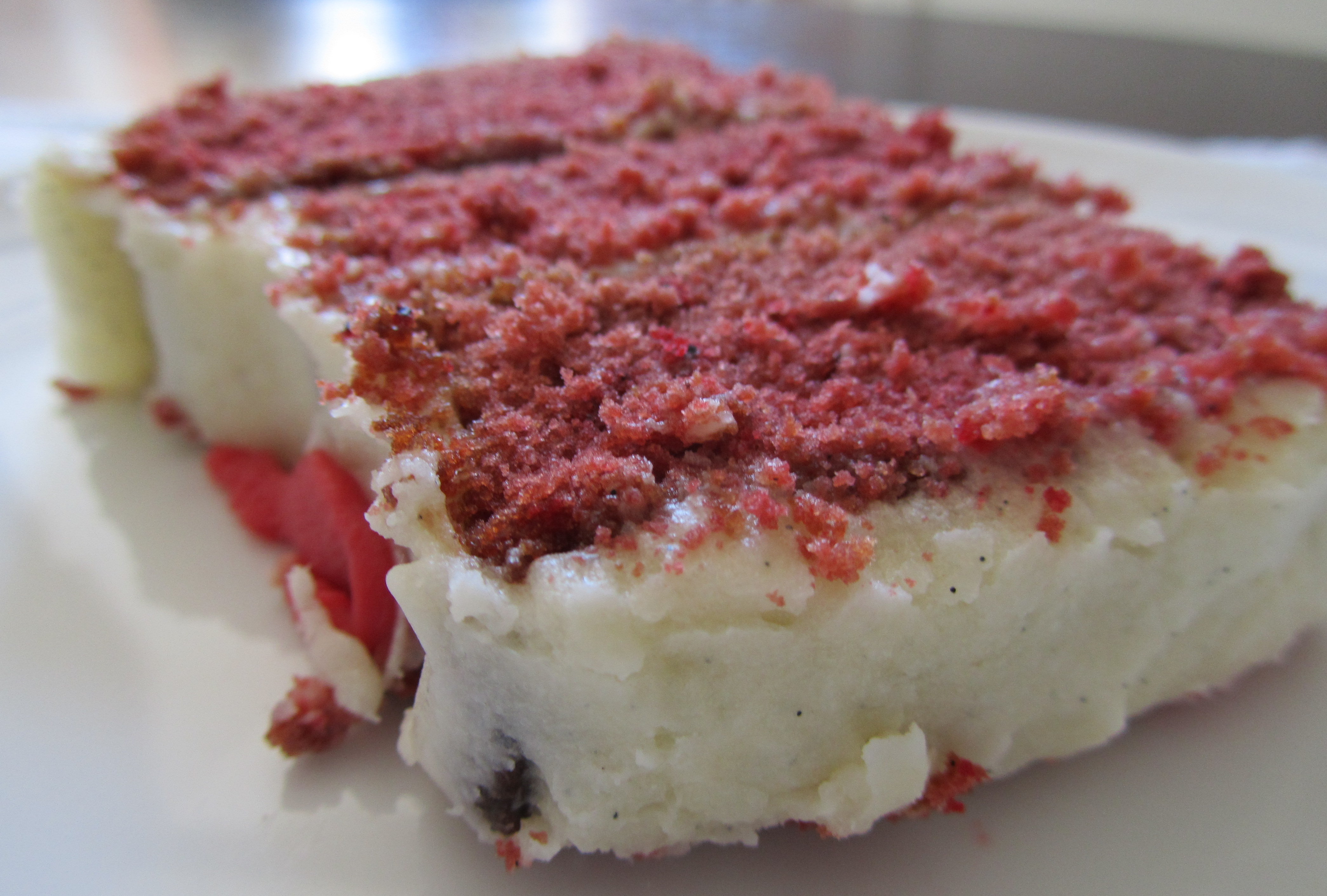
By a strange coincidence I started this blog a few days before my birthday. Actually, one of my first posts was about the ice cream cake my Mother used to do every year around my birthday . This year, however, for some reason, I was not really in the mood for a creamy cold cake… I kept seeing red velvet cakes appearing on different TV shows and food magazines, much to the joy and delight of those who ate them. The New York Times described it as “a cake that can stop traffic”. If even the NY Times said it and Nigella had the recipe on her book and website, why not give it a go and try it for the dinner party?
As its own name says, the red velvet cake is red. Red in an unnatural shade of red. In case doubts that it should be red persist, it is layered with white frosting, to make the red go even redder. It is supposed to have a slight taste of cocoa and vanilla, and a velvety texture given by buttermilk. The red color is allegedly the result of the presence of anthocyanin in the cocoa, which becomes red in the presence of an acid, explaining the necessity of adding unusual ingredients in a cake like vinegar and buttermilk. Strictly speaking, the cocoa might turn to a reddish shade and become dark-red-brown…. To get the extra bright red, abundant food dye has to be added. No one knows for sure where the recipe comes from, whether it was created on the South of the United States or it was an experiment gone mad in a Canadian department store. For sure, it seems to be a New World creation, as it is hardly ever seen on European cookbooks. In fact, I cannot remember ever seeing it for sale on this side of the Atlantic patisseries.
As this was a birthday cake, an elaborate decoration was expected. I had planned to do a flamenco style polka-dot pattern, being the number of red dots being equal to my age (approximately and vaguely equal- to avoid sticking candles on the cake, any excuse was worth trying). But… the butter cream was a bit more runny than it should have been, and though I had a perfect cylinder of marzipan to start with, cutting it in thin slices didn’t do any favors to its shape. It ended up as a Dali interpretation of a rustic Seville-olé red velvet cake (picture here). Per se, the name didn’t conceal the less-than-optimal decoration, but I earned a lot points for imaginative and rhetoric culinary speech.
But, it all comes down to taste. And it tasted good. Very good, in fact: a very rich taste (not totally cocoa, but also not totally vanilla), with a moist and sensuous texture. A pleasure as sinful and guilty as only cake can be.
Ingredients
Cake
- 2 cups shortening (=226g; I replaced it with butter)
- 3 cups of sugar (=600g)
- 4 eggs
- 4 ounces of red food coloring (I used 20ml in total)
- 1 tablespoon of cocoa
- 2 teaspoon salt
- 5 cups flour (=640g)
- 2 cups butter milk (=500ml)
- 2 teaspoon baking soda
- the seeds of 2 vanilla pods
- 2 tablespoons vinegar (I used white balsamic, for no reason in particular. I just happened to have it on my cupboard).
Butter cream (frosting)
- 10 table spoons flour (I used Maizena, as I like its flavor and consistency better than regular flour)
- 2 cups milk (=500 ml)
- 2 cups unsalted butter (=226g)
- 2 cups sugar (=400g)
- the seeds of 2 vanilla pods
Method
Cake
Preheat oven to 180oC. Butter and line 3 9″ baking pans with parchment paper (I used 3 squared trays)Place melted butter and sugar in bowl and beat until light and fluffy (about 10 minutes). Add eggs one at a time, beating after each addition.
Make a paste of the food colouring, cocoa and salt (I never got a paste, as 20ml were not enough to bind with the cocoa). Add to butter mixture.Mix vanilla with buttermilk. Dissolve baking soda in vinegar, add to butter milk (it gets a bit fizzy – you might want to consider to use a larger bowl).
Sift and measure flour; add to creamed shortening alternating with buttermilk mixture ending with flour. Mix until smooth approx. 4-5 minutes.Pour into pans. Bake 35-40 minutes. Remove from oven, cool 10 minutes, then invert cakes onto cooling rack and to cool completely before frosting.
Frosting
Make a paste with flour and a small amount of the milk. Add remaining milk gradually, mixing until smooth. Cook in a double boiler at medium heat until thick (do not forget to stir while cooking to avoid burning. If it gets to hot, remove it from the heat and stir to cool it a bid. It should be a very slow simmer. At the end, it will be a very thick mixture at end, but if you can see lumps it is pass it through a fine sieve). Let cool.
Cream butter with icing sugar and vanilla. Beat until fluffy. Add cooled flour mixture 1 spoon at a time, beating well between additions.
Asparagus tart
Posted: May 7, 2011 Filed under: Pastry and Baking, Vegetables | Tags: Asparagus, David Leite, Quiche, spinach Leave a comment
I found this dish by accident in Leite’s Culinaria. And it was just what I was looking for: asparagus are in season, a party was on the planning and if not edible, at least it was decorative. Truth to be said,it was a pretty good idea. It even passed the 11 year old test (minus asparagus).
Asparagus Tart Recipe
Ingredients
- 1 bunch asparagus, ends snapped off
- 1 bunch fresh spinach (about 20 largish leaves), stems trimmed (optional) (I used 500g frozen spinach, prepared as in the packet instruction)
- 4 tablespoons butter, melted
- 1 pound phyllo, thawed according to package directions (used regular puff pastry, bought in the supermarket).
- 1 3/4 cups grated Gruyere
- 3 large eggs, lightly beaten
- 1 cup heavy cream (used soya cream)
- 1/4 to 1/2 teaspoon freshly grated nutmeg
- Sea salt and finely ground black pepper
Method
1. To make the asparagus tart, preheat the oven to 175°C.
2. Bring a pot of water to a boil. Have a bowl of ice water ready. Plunge the spears into the water for just a moment to blanch it, then remove it and toss it into the ice water. Do the same with the spinach, if using.
3. Meanwhile, brush a 23cm square tart pan or a 36cm rectangular tart pan with a little melted butter and line it with a sheet of phyllo pastry, pressing the phyllo against the side of the pan and allowing the excess to hang over the edge of the pan. Brush the top of this sheet with more butter and top it with another sheet of phyllo. Repeat until all the phyllo is used. Trim the edges of the phyllo flush with the top of the tart pan. (Phyllo can me a nightmare to work with, and I was in a hurry. Just got some regular puff pastry from the supermarket, buttered the tart tray and put the sheet in).
4. Drain the asparagus and the spinach, if using, and pat them completely dry.
5. Setting the quiche:
If using spinach: Arrange a layer of spinach on the phyllo. Sprinkle lightly with salt and pepper. Add the Gruyere, a second layer of spinach, and season again. Beat the eggs, cream, and nutmeg in a bowl, then pour the mixture over the tart. Arrange the spears in a row on the tart. Brush the exposed pastry edges with a little butter. Cut a piece of parchment or foil that covers the inside of the asparagus tart but leaves the phyllo edge uncovered.
If not using spinach: Sprinkle the Gruyere over the phyllo. Beat the eggs, cream, and nutmeg in a pitcher or bowl, then pour the mixture over the tart. Arrange the spears in a row on the tart. Sprinkle lightly with salt and pepper. Brush the exposed pastry edges with a little butter. Cut a piece of parchment or foil that covers the inside of the asparagus tart but leaves the phyllo edge uncovered.
6. Bake the asparagus tart, uncovered, for 15 minutes. Cover the center but not the edge of the pastry with the parchment or foil and continue to bake until the center of the tart is just set, 15 to 20 minutes more. Let the asparagus tart rest a few minutes before slicing. (I was not very precise with the paper foil, and the edges got slightly burn).
Red onion confit, fresh thyme and goat cheese tartelettes
Posted: April 26, 2011 Filed under: Pastry and Baking | Tags: Finger food, Goat cheese, Herbs, Red onions, Snacks, Sugar 2 Comments
I first saw the onion confit and and goat cheese tartelettes on Mafalda Pinto Leite’s website (here, in Portuguese). It looked easy enough, but things went South when ready-made caramelized onion the recipe called for was nowhere to be find in Zurich. The only solution was to embark on a quest for the perfect red onion confit recipe. Finally, it was C’est moi qui l’ai fait who offered the perfect method for a luscious red onion confit. And, since they had gone through all the trouble of doing their own jam from scratch, it was only fair to give it a go to their tartelette. It was a good call – the whole batch was gone in less than a sigh.
Red onion confit, fresh thyme and goat cheese tartelettes
Ingredients
- 1 roll of puf pastry
- 1 pot of red onion confit (recipe here)
- 1 fresh soft goat cheese, crumbled
- 1 yolk
- 1 tablespoon of milk
- Fresh thyme
Method
Preheat the stove to 210oC
Spread a bit of flour all over the kitchen top, and lay the pastry roll. Mix the yolk with the milk, and brush it all over the pastry surface.
Cut it in squares (4cm side), and place them on the baking tray.
Drop a teaspoon of onion confit at the center of each square (the corners should be free, so they can puff). On top of the confit, put the equivalent of a small teaspoon of cheese. Sprinkle with fresh thyme.
It is now ready to put on the stove, for about 8min, or until the pastry is golden.
 Lucie Loves Food
