Coconut cake
Posted: August 25, 2012 Filed under: Dessert, Pastry and Baking, Vegetarian | Tags: Cake, Coconut, Sugar, Thomas Keller 1 Comment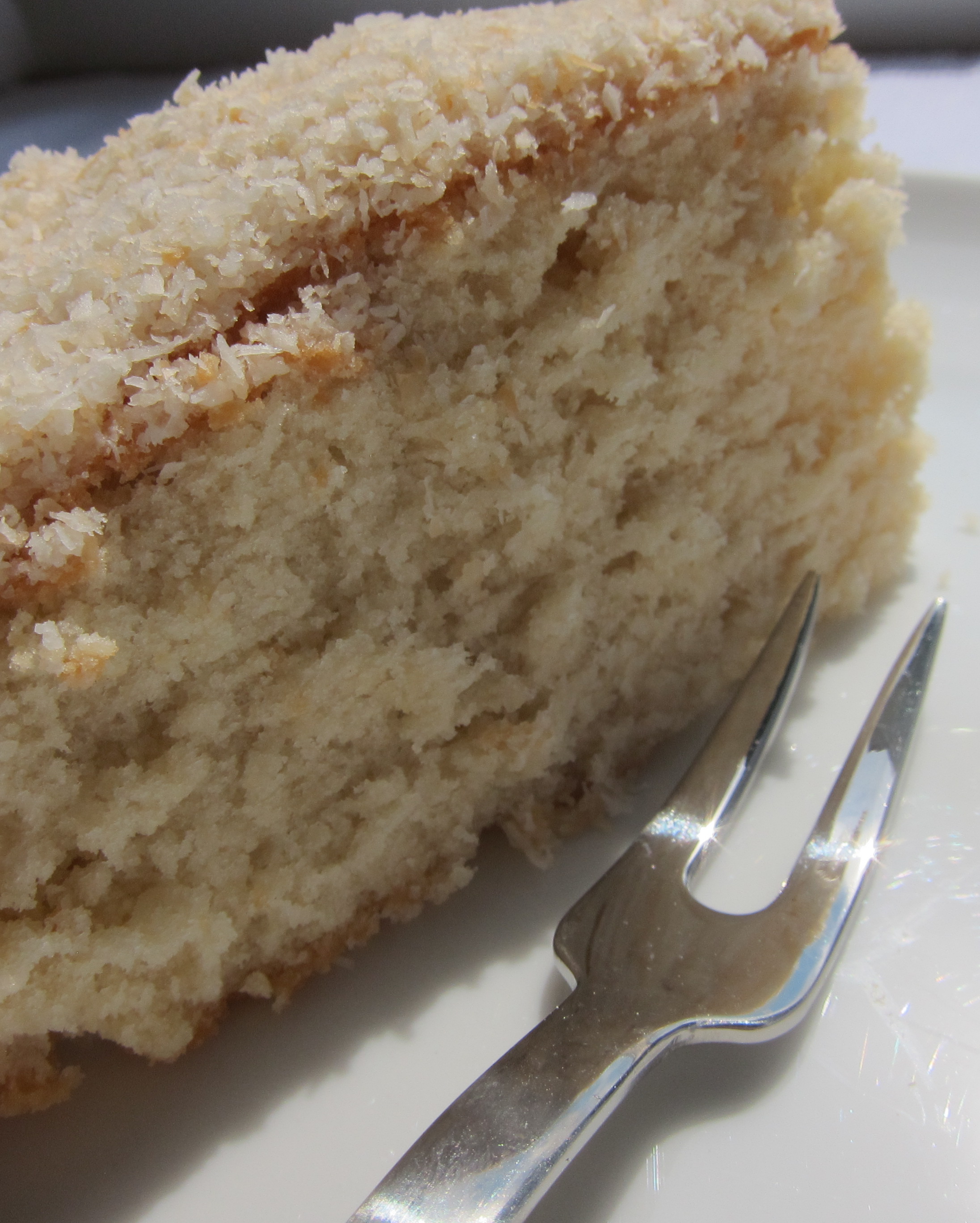
Not my birthday cake, but close enough… G. and I share the same birthday, and it has become sort of a tradition to have a dinner party around this time of the year. After agonizing for a couple of days what I would be baking for the occasion, I ended up seeing this one on Thomas Keller‘s Ad hoc at home. It was just not the flavors which caught my attention – there was also a very nice story attached to it. And, having read this was a very dear cake to him, I decided to go for it in less than heartbeat. Let me warn you, it is not an easy dish. But, it is so rich and velvety you end up forget all the cooking efforts once you start eating it.
In case you were wondering what sort extravaganza cake I baked this year, the answer is not 42… I actually let myself be (very) spoiled my dear Zurich friends. All I can say is that it was chocolate, it was rich and it was dense. Very dense… which is always a good thing when it comes to chocolate.
Coconut cake (adapted from Thomas Keller‘s Ad hoc at home)
Ingredients
- 500mL of coconut milk
- 1 1/2 teaspoons pure vanilla extract
- 380g of flour
- 1 tablespoon baking power
- 3/4 teaspoon of salt
- The whites of 6 large eggs
- 400 granulated sugar
- 180g of unsalted butter at room temperature
- 2 cups of drie shredded coconut
- Sugar syrup (3 parts of water to 1 part of sugar).
Method
1.Pre heat the oven to 180oC (=350oF). Coat a baking tray with baking spray (or butter and flour).
2.Prepare the coconut-vanilla mixture. Put the coconut milk a small pan and whisk to blend. Bring to a gentle simmer, keeping on whisking until most the water has evaporated. You should have the equivalent of 1 cup. Remove from the heat and let it cool down. When the coconut is at room temperature, add the vanilla extract and mix well.
3. Prepare the dry ingredients mix. Sift the cake flour and the baking powder. Stir in the salt and put aside.
4. Prepare the white egg sugar mixture. Whip the whites with a whisker until they begin to froth. Slowly add 150g of sugar and whisk you see medium peak forming. (the whisker should be put to slow when you start adding the sugar, and then put to medium-high). Put aside.
5. Prepare the butter and sugar mix. Put the butter on a bowl and mix with a paddle at medium-low speed until it starts to soften. Add the remaining sugar. Mix until it is light yellow and fluffy.
6. Mix the dry ingredients, the butter and coconut mix. It is not important not to over mix the batter. Each addition doesn’t have to be completely incorporated before you add the next. Add half the dry ingredients and mix; then add half the coconut mix and incorporate it. Start all over again: half of the remaining dry ingredients, then the coconut milk. Repeat with what is left. Make sure you mix the bottom of the bowl.
7. Gently fold in the egg whites (1/3 of it at a time).
8.Put batter in the baking tray and gently smooth the type. Put in the oven for about 30min, and check with the skewer if it done. When the skewer comes out of cake dry, take the cake and let it cool down for about 10min before you remove it from the baking tray. Let it cool completely.
9. Meanwhile spread the coconut on a baking sheet and toast lightly – about 6 to 8min. Let it cool down.
10. Start working on the sugar syrup. In a sauce pan, mix the sugar with the cold water and put to boil. Stir constantly until the sugar dissolves completely and the mixture is clear (app 3min).
11. Once the cake is cool, brush all the surfaces with the sugar syrup. Sprinkle with the roasted coconut.
Serrano ham with melon mousse
Posted: August 18, 2012 Filed under: Pork, Tapas | Tags: Ham, Melon, Simone & Ines Ortega, Spain, Tapa 1 Comment
This is where the rest of the ham ended up… A delicious combination of flavors with a sophisticated touch, ideal for Summer.
Serrano ham with melon mousse (adapted from the Inés and Simone Ortega’s Book of Tapas)
Ingredients
- 3 gelatin leaves
- 3 halved small melons, seeds removed (it works best with cantaloupe)
- 1 cup (=250 mL) of whipped cream
- 12 thin slices of cured ham
- Salt and pepper
Method
1. Follow the instructions of the box to prepare the gelatin leaves.
2. Scope out of the flesh of the melon with a spoon and put them skins in the fridge. Make sure you don’t break brea skins as you will need them to plate this dish.
3. Puree the melon flesh in a blender, until you don’t see any chunks of fruit.
4.Put a small amount of the melon puree in a small pan. Warm it through over a low heat. Fish out the gelatin leaves from the water, and add to the warm melon. Stir well until it dissolves. Fold in the remaining puree and let it cool.
5.Fold the whipped cream in the gelatin-melon mix. Season with salt and pepper.
6. Poor the mixture into the melon shells and put it back into the refrigerator until it is solid.
7. When you are about to serve it, put the ham slices on top. Be careful not to let the melon go warm.
Gazpacho
Posted: August 12, 2012 Filed under: Salad, Soup, Vegetables, Vegetarian | Tags: bread, Ferran Adria, Soup, Spain, Summer, Tomato Leave a comment
- 3 bleached garlic cloves, peeled
- 2 onions peeled and chopped in big chunks
- 60g cucumber peeled and chopped in big chunks
- 75g red bell peppers seeded and sliced
- 1Kg rip red tomatoes, chopped in big chunks
- 30g of white rustic bread, without crust, torn into pieces
- 120ml cup water
- 6 tablespoons of olive oil, plus extra to serve
- 2 tbsp sherry vinegar
Method
First, peel the garlic cloves and drop in small saucepan with cold water. Bring the water to a boil. When the water begins to boil, take out the garlic out of the water and put into a bowl of ice water to quickly cool it. Repeat twice, always starting with cold water.
Peel and cut the vegetables into large chunks and put them into a large bowl. Add the tomatoes into large wedges and put in a bowl with the onions, cucumbers, and bell peppers. Add the bread, torn into pieces, then pour over the water. Process everything together using a hand-held blender, about 5 min until is well combined. Add the olive oil, sherry vinegar, salt and pepper and blend the soup until smooth and creamy. Chill in the fridge before serving (at least 2 hours). Serve the gazpacho with a plus an extra drizzle of olive oil. If you want, you can add cured ham, finely chopped egg, tuna, croutons, chopped pepper…..
Marinated mozzarella and tomato
Posted: August 4, 2012 Filed under: Salad, Vegetarian | Tags: Herbs, Mozzarella, Salad, Summer, Tomato, Yotam Ottolenghi Leave a comment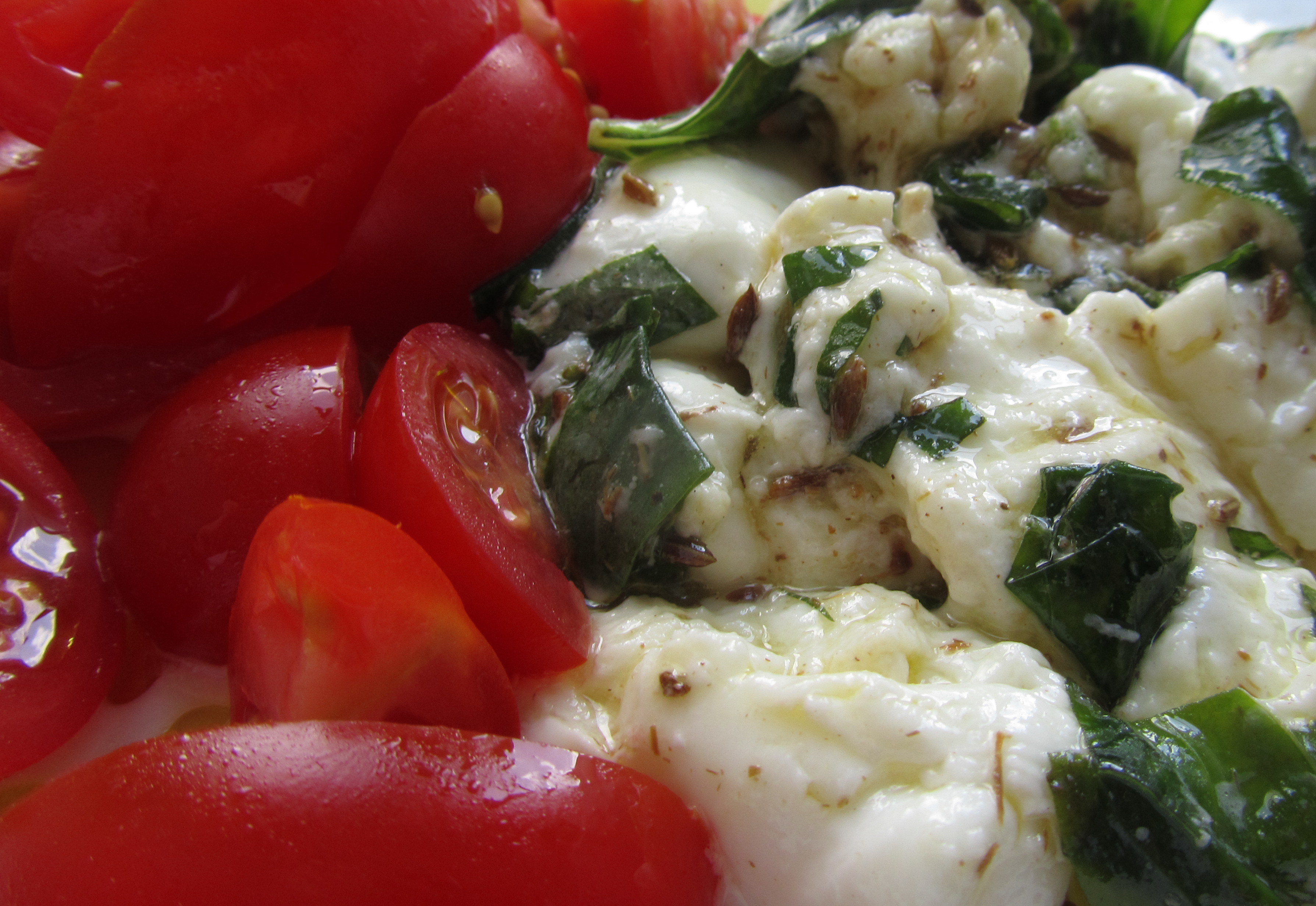
If you had lived in Zurich for long enough, you will have quickly learnt that if the sun is out, you have to leave home and in enjoy it while it is there. God only knows when you will be able to enjoy again walking down the street without having to resort to several layers of clothing. It could be next day, but it can also be in a week, in a month or next year (if ever!). This Summer, it was even more extreme than usual. After a few weeks of sheer desperation, we found ourselves enjoying each quasi-summer day like it was the last one. And, many times it seemed like that indeed it was, and that we all would be condemned to an existence plagued with cashmere cardigans, heavy scarfs and thick stockings…. So, in a nutshell – there was not really a lot of opportunities for cool dishes. Except, maybe this one, from Yotam Ottolenghi’s Plenty. An italian classic, converted into a ubiquitous dish:tomato-mozzarella-basil dictatorship. But, this one has a twist – roasted fennel seeds – which makes it outstanding. Not the usual watered stuff you get so often here in Zurich…
Marinated mozzarella and tomato (adapted from Yotam Ottolenghi’s Plenty)
Ingredients
For the salad
- 250g mozzarella (use buffalo mozzarella for best results)
- 4 ripe tomatoes, cut in wedges
For the marinade
- 1/2 tablespoon of crushed roasted fennel seeds
- grated zest of 1 lemon
- 15 basil leafs shredded
- 2 tablespoons of chopped oregano
- olive oil to taste (or a mix 1:1 of olive oil and rapeseed oil)
- 1 garlic clove crushed
- salt and pepper to taste
Method
For the marinade
First, put the fennel seeds in a small frying pan and heat until they start to pop. Drop them in a mortar and grind them until you have a chunky powder.
Combine all the marinade ingredients in a small bowl and mix well. Drop in the shredded mozzarella (shred the cheese and the basil with your hands, for an extra touch of rusticity).
Set aside for a about 20min
For the salad
In a plate, put the marinated cheese and the tomatoes side by side. Drizzle with a bit more olive oil, if necessary and serve.
Almond cake
Posted: July 22, 2012 Filed under: Dessert | Tags: Almonds, Cake, Ferran Adria, Spain, Sugar 1 Comment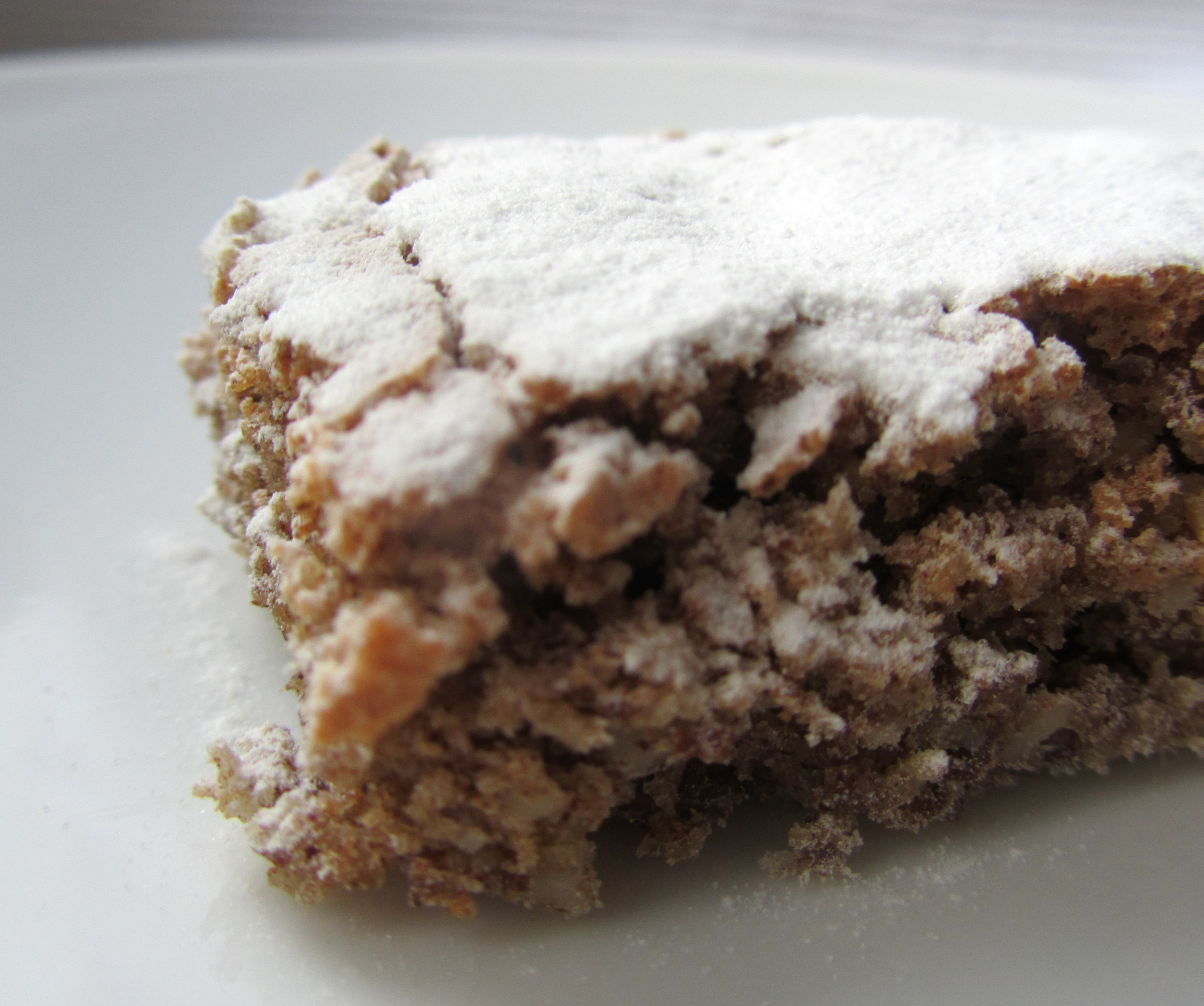
This was supposed to be a Tarta de Santiago [St James’ cake]. A bad kitchen day and a less than good execution converted it into a simple almond cake. But, not everything was lost… I found back a childhood flavor. Actually, something which resembled to what used to be my mother’s favorite cake. I can still remember the nanny doing it year after year for her birthday with super sweet ovos moles [soft eggs] filling. And on the side, an ongoing polite fight between my mother and the nanny, where mother would ask the nanny for the recipe and the nanny would say she had promised never to give it away. The nanny eventually retired and all we got was a close enough version scribbled in a piece of paper. Or, maybe even the right recipe, but no one could bake it like her…
Almond cake (adapted from Ferran Adrià’s The Family Meal)
Ingredients
- Baking spray or butter and flour as required
- 3 large eggs (70g)
- 150g of sugar
- Ground almonds 150g (fail of the day – if you want the St James cake, they must be peeled. The mix I used was not peeled and instead of getting an yellow-ish cake, I got a browned one with a bit more bite than it should)
- 1 pinch ground cinnamon
- Icing sugar as required
Method
1.Preheat the oven to 180C. Coat a baking tray with baking spray (or butter and flour) (Ferran Adrià recommends a 30*50cm; I used a 30 cm round one
2. In a large bowl, beat the whole eggs and the sugar until you have a pale yellow foamy mixture
3. Add the the ground almond and the cinnamon to the egg mixture. Fold it slowly in the same direction with a wooden spoon, until you obtain a fluffy and airy mixture.
4. Pour the mixture in the tray (second fail of the day – if you want the St James cake, it must be about 1.5cm deep. My cake almost doubled it).
5. Put in the oven for about 20min, or until golden brown. Make sure it doesn’t stick to the sides of tray when you take it out of the tray.
6. Sprinkle icing sugar on top of it before serving.
Jamón ibérico [Iberian ham]
Posted: June 17, 2012 Filed under: Pork | Tags: Ham, Spain Leave a commentIn Spain, we take cured ham seriously. Very seriously, as a matter of fact. But, when I posted my ex-Mother-in-law’s take on Iberian ham and tomato bread a couple of weeks back, I was far from image the Spanish Association of Selected Swine and Pure Iberian Breeders would get in touch with me via twitter. “Do you like ham! But, which one do you like? “, the asked me in less than 140 characters. In case I didn’t know my cured ham, they pointed me to a documentary about everything you always wanted to know about Jamón ibérico and never dared to ask. From the different types of pig to the state of industry during the recession and the grades of cured ham, everything is in there.
Even if you don’t share a passion of ham, it is worthwhile taking the time to watch. And, hopefully not be fouled again by some labels we see at the food shops in this part of the world.
Saltimbocca
Posted: June 9, 2012 Filed under: Beef | Tags: Ham, Herbs, Veal Leave a comment
A curious detail: if you check the English entry of Wikipedia for trivia, you will learn saltimbocca are popular in southern Switzerland, Italy, Spain and Greece; if you check the German entry, you will find out they are a delicacy typical of the Rome area. I haven’t been to Rome yet, but I would not be surprised if the native never heard about it or you were served something totally different when you asked for them.
In any case, M. – a German – was kind enough to drive me through the complexities of the making of saltimbocca. I managed to reproduce it the day after without much effort. In the background, risotto alla milanese, courtesy of M.
Ingredients
- As many veal cutlets or scallops as you need
- As many slices of cured ham as you have slices of veal (if you want to be very precise, it has to be prosciutto. In my case, it had to be jamón)
- As many slices of fresh sages as you have slices of veal.
- Olive oil
- Wooden toothpick
Methods
Flatten the cutlets if needed. Lay them a clean surface, then put on top of each a slice of prosciutto and top it with the leaf of sage. Affix the prosciutto to the veal with a toothpick.
Heat the olive oil in a skillet and sauté the cutlets until done. Don’t put too many of them on the skillet, otherwise they will be boiled. You will need to allow more time on the veal side than the prosciutto side. Season to taste and serve them risotto alla milanese.
Iberian ham and tomato bread (pa amb tomàquet amb pernil, pan con tomate y jamón)
Posted: June 3, 2012 Filed under: Tapas | Tags: bread, Catalonia, Ham, Spain, Tapas, Tomato 2 Comments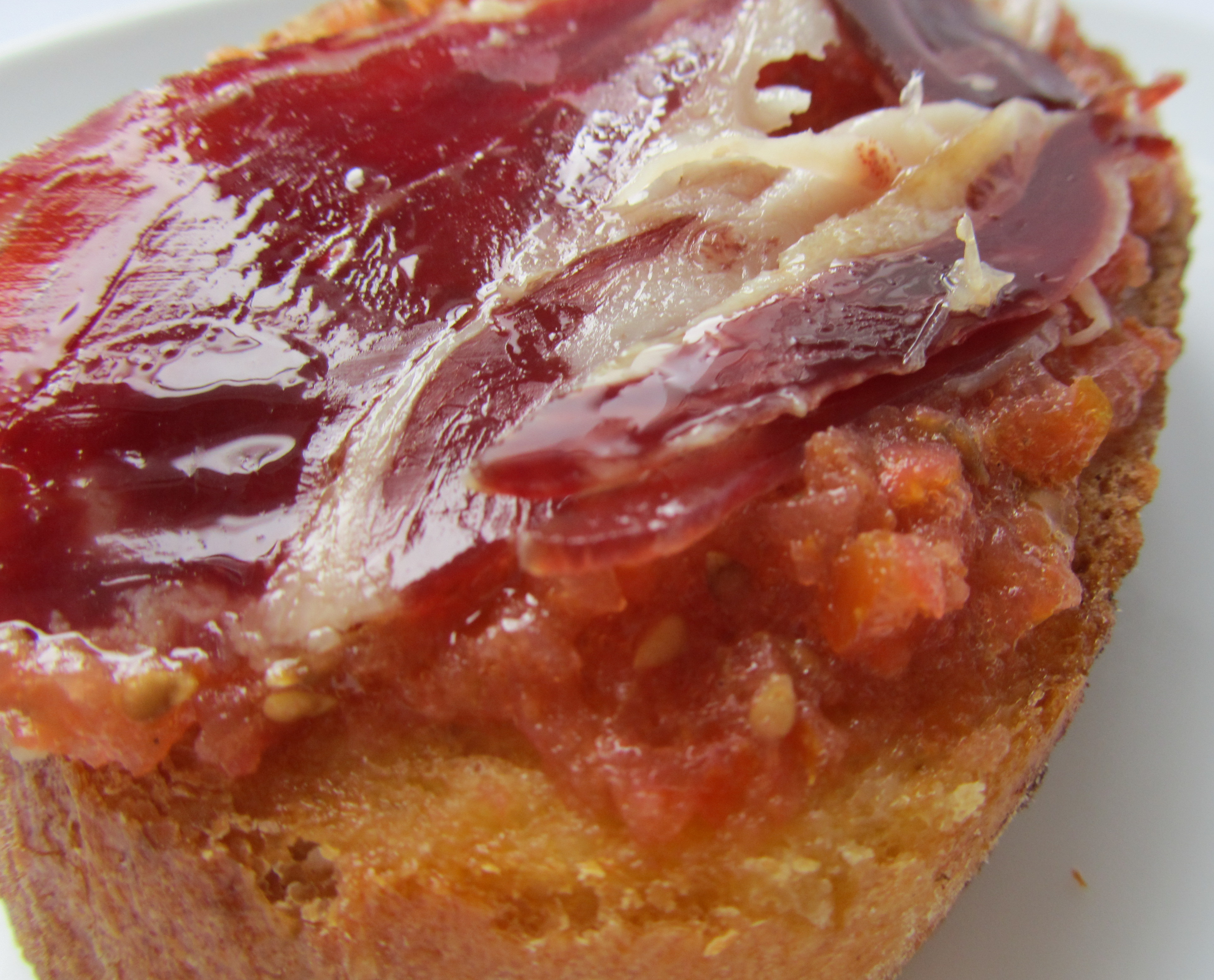
Fly-in-fly-out to Barcelona… A little less than 11 hours in town, which allowed to fit in enough time to do my thing, touch the Mediterranean and buy proper ham at the airport free shop. And, by proper ham, I mean jamón ibérico de bellota [acorn Iberian ham], the dark red meat marbled with veins of fat which only the free range black Iberian pigs who feast on acorns can have. It is only the finest of cured hams and is considered one of the best delicacies in the world. Well, let’s make it clear – it actually is. I have seen otherwise serious gown up almost shed a tear when they tasted. As M. eloquently put it “the kind of thing that makes worthwhile years of studying just to be able to afford it”. And, if I may add, instrumental to cope with endless hours of corporate drama.
In any case, once the precious ham was acquired, carefully transported into Switzerland and put to rest in the fridge, I still had to figure out how to serve it. It was not just a question of dropping it in a hot plate… This ham deserved the best ingredient to compliment its nutty rich flavor and bring the best out of it. Since I had just been in Barcelona, it seemed totally logical to serve it with tomato bread, a combination of flavors made in heaven, known in Catalonia as pa amb tomàquet. It is said to be the most popular dish of their cuisine, and you may find different versions and lines of thought. Toasted or fresh bread? Garlic, or no garlic? Rub the tomato or use a pre-made mixture? Grate the tomato or puree it? I just avoided all the metaphysical question by resorting to my ex-Spanish Mother-in-Law strong recommendations.
Iberian ham and tomato bread (pa amb tomàquet amb pernil, Pan con tomate y jamón)
Ingredients
- Finely sliced cured ham
- 1 garlic teeth, peeled and cut in half
- Slices of toasted rustic bread
- Tomatoes (I used cherry tomatoes, as they taste of something. When in Spain, I would have probably used regular grape tomatoes.
- Olive oil to taste
Method
1. Grate the tomatoes into a bowl.
1. Toast the bread for a few minutes, until is warm and slightly crusty
2. Rub with the half garlic.
4. Drizzle with olive oil
5.Spread the grated tomato paste to taste
6. Put the ham slices on top
7. Serve
Strawberry smoothie
Posted: May 26, 2012 Filed under: Fruit, Vegetarian | Tags: Milk, Strawberries, Sugar, Yoghurt Leave a comment
It is only a smoothie… Not much art in putting it together, really. Just drop in the mixer 1 part of cut strawberries, 1 part of plain yoghurt and 1 part of milk. If you must, add crushed ice cubes. Buzz in a mixer, check for sugar, buzz again. Chill. Drink. It was definitely more complicated put the kitchen aid to work for the first time…
Cooking class with the Laughing Lemon – the pesto battle
Posted: May 12, 2012 Filed under: Pasta, Vegetarian | Tags: Laughing Lemon, Pasta, Pesto Leave a comment
So, for over 40 years, I consistently refused all cooking classes my Mother ever offered. I am even (semi) proudly self taught. My poor suffering testers guests are all alive and still show up for dinner every now and again. What would make me, food-blogger wannabe, take cooking classes all of a sudden? Have I gone softie, in my old age?
Well, not really… The analytical and brainy answer would be something along the lines of filling the gaps in my culinary knowledge. Which is fancy to say I have no clue about Italian cuisine, including pasta and its sauces, pizzas and risottos… It is not the kind of thing Portuguese and Spanish tend to cook , and, lets face it, not its secrets are exactly passed along generation to generation. It can try, but clearly, it is not my forté…
The right brain answer was – of course – because I wanted to. I had heard so much about the Laughing Lemon and learnt so much with his blog and posts on the Englishforum.ch, that it seemed even disgraceful to have missed his classes for years.
It was probably one of the best things I did to fill my culinary knowledge gaps. And, it was not only educational – it was also great fun. With infinite patience, Jack showed us different methods for making a pasta sauce, and explained which pasta types are appropriate for each sauce style. To make it even better, we even had time for a demonstration of old vs new cuisine techniques (and eat them). I can promise you the Internets if filled with pages and fora discussing this particular issue – should a pesto be made with a mortar or a blender? Which one of the methods gives a better pesto? Does it matter, really? The battle of pesto was served…
The class was divided in two: the Team Mortar, with all the persons who had a bad day at work; the Team Blender, with all the persons who were calm, cool and collected. Both teams got the usual ingredients: fresh basil leaves, garlic, pine nuts, olive oil, salt and Parmesan cheese. And, this was what happened:
Team Mortar
The crushed garlic, basil, pine nuts and salt were dropped in a big mortar. Then each of the team members used the pestle to grind the ingredients down to a paste. After 20min of great effort, the cheese was folded in and evenly mixed with the green paste (a lot more grounding, needless to be said). Finally, the olive oil was added little by little, mixing with a wooden spoon until well incorporated in the mix. At the end, Team Mortar had a green paste with some floaters and pellets.
Team Blender
Chit-chated for 28 min, and then suddenly realized Team Mortar was * almost * done. Quickly placed the ingredients in the blender, and buzzed it three times (app) until it was homogenized. Then checked for consistency and taste (a little more salt), buzzed a few more times, and a perfect smooth and green mixture was obtained.
Everyone tasted both pestos and voted as honestly as they possibly could. It was a close draw, but the smoothness and consistent taste stilted the scales in favor of the Blender Team. It seems that normally, the Team Mortar wins, but not with this tough crowd.
For more information about the Laughing Lemon cooking classes can be found here.
 Lucie Loves Food