Pain perdu with raspberries and ricotta
Posted: May 4, 2012 Filed under: Dessert, Eggs | Tags: bread, Dessert, Eggs, Milk, Sugar Leave a comment
Pain perdu literally means “lost bread” in French. As in the bread which you cannot eat while french and becomes stale. Probably during Roman times, a resourceful cook realized that if the bread was softened by dipping it in milk and/or eggs and then fried, it could be converted it into a delicious dish apt for all tastes. I grew up in Portugal eating it, as fatias douradas [golden slices] over Christmas, generously sprinkled with sugar and cinnamon. When I moved to Spain, I learnt their name was in fact torrijas and it would make its appearance later down the year during Lent. I am pretty sure if I bring this topic up in the office, Swiss and the Germans would claim to have their own variety of the dish. But, that belongs to another post… To close the debate, it might be worthwhile mentioning there is a considerable difference between fatias douradas, torrijas and pain perdu. The iberian varieties are deep fried, while the French opt for browning them with butter.
In any case, when I found an ancient panettone in the back of the cupboard, I remembered this recipe I had seen ages ago in a Gordon Ramsay’s book. It also had been a while ever since I used this book, and in fact, I even had a perfect group of [s]suffering guests[/s] testers coming home for brunch. Perfect occasion, perfect ingredients, perfect guests… As every Gordon’s recipe, if you follow the instructions to the letter, you will get exactly what you are supposed to get. Probably due to the differences in the ingredients, the raspberry mix got a bit messy, but nothing a pair of experienced hands couldn’t fix to the right consistency and taste. All in all, in almost less time than it took to cook it, not only I managed to get rid of old panettone but also had a very happy and satisfied crowd. Definitely calories worthwhile taking.
Pain perdu with raspberries and ricotta (adapted from Gordon Ramsay’s Fast Food: Recipes from The F Word)
Ingredients
- 125g ricotta cheese drained
- 125g mascarpone
- 2 tablespoons sugar
- 200g raspberries
- 25g butter
- 4 slices of panettone
- 3 large eggs beaten
Method
1. Put the ricotta, mascarpone, sugar and lemon juice in a bowl and mix until it is smooth. Fold half the raspberries and mix softly.
2. Put 1 slice of panettone in the egg mix and let it soak for a couple of minutes.
3. Fry the slice on both sides until golden brown (about a couple of minutes). Take it out of the pan and put it in a serving plate.
4. Repeat (2-4).
5. Put a generous spoon of the raspberry mix on top of the warm slices of fried panettone, and finish with the remaining raspberries.
6. Serve.
2. Melt the butter in a non stick pan until it begins to foam.
Spinach and cheese parcels (empanada de espinacas y queso)
Posted: April 22, 2012 Filed under: Pastry and Baking, Vegetables, Vegetarian | Tags: Carlos Horrillo and Patrick Morcas, Cheese, Spain, spinach Leave a comment
Once I got the empanada de atun [savoury tuna parcels] properly tested and under control, I decided to expand to other combinations. Not knowing where to start, I turned to Carlos Horrillo and Patrick Morcas, whom seemed to favor spinach, cream cheese and spinach. If it is good enough for Patrick and Carlos, it is also good enough for me…. I am actually quite fond of spinach, which helped a bit my decision. Of course, living in Switzerland, the Cheddar in the original recipe had to be replaced by Emmentaler. No one noticed seemed to complain – if anything it conformed better to the taste of hardened expats living in Switzerland for longer than they want to admit. All in all, a great dish to serve when the occasion requires food easy to eat or informal gatherings. For bonus, it is vegetarian and all the greenies make it look a bit more healthy than its tuna fish counterpart. Eat warm or cold, with a beer or a glass of red wine.
Spinach and cheese parcels (empanada de espinacas y queso, adapted from Carlos Horrillo and Patrick Morcas’ Tapas: Simple Flavours, Striking Combinations)
Ingredients
- 2 packets ready of read-rolled puff pastry (one for the bottom, the other to cover it)
- 800g of fresh spinach, washed
- 100g of full fat creamy cheese, like Philadelphia
- 100g of grated Emmentaler cheese
- Salt and pepper
- Olive oil
- 1 slightly beaten egg
Method
1. Coat the bottom of a heavy bottom non sticky pan with olive oil and put it on high heat, until the olive oil is smoking hot.
2. Drop the the spinach leaves inside, season whit salt and turn the leaves until they start to wilt.
3. Transfer the leaves to sieve lined with kitchen paper, so it absorbs the bitter liquids.
4. Allow to cool, and put them in a large mixing bowl.
5. Add both cheeses to the spinach and mix everything together until it is homogenous.
6. Allow to cool overnight in the fridge
7. Heat the oven to 200 oC
8. Line the bottom and walls of the rectangular baking tray previously buttered. Pinch it with a fork and fold in the e spinach and cheese mixture.
9. Put the second sheet of puff pastry on top, and close the edges trimming the excess pastry. Seal with the beaten egg. You can brush the whole surface to look shiny.
10. Leave in the stove for about 20m (or according to the instructions), until the pastry is done.
Chicken wings with mushrooms
Posted: April 14, 2012 Filed under: Chicken | Tags: Chicken, Ferran Adria, Garlic, Mushrooms Leave a comment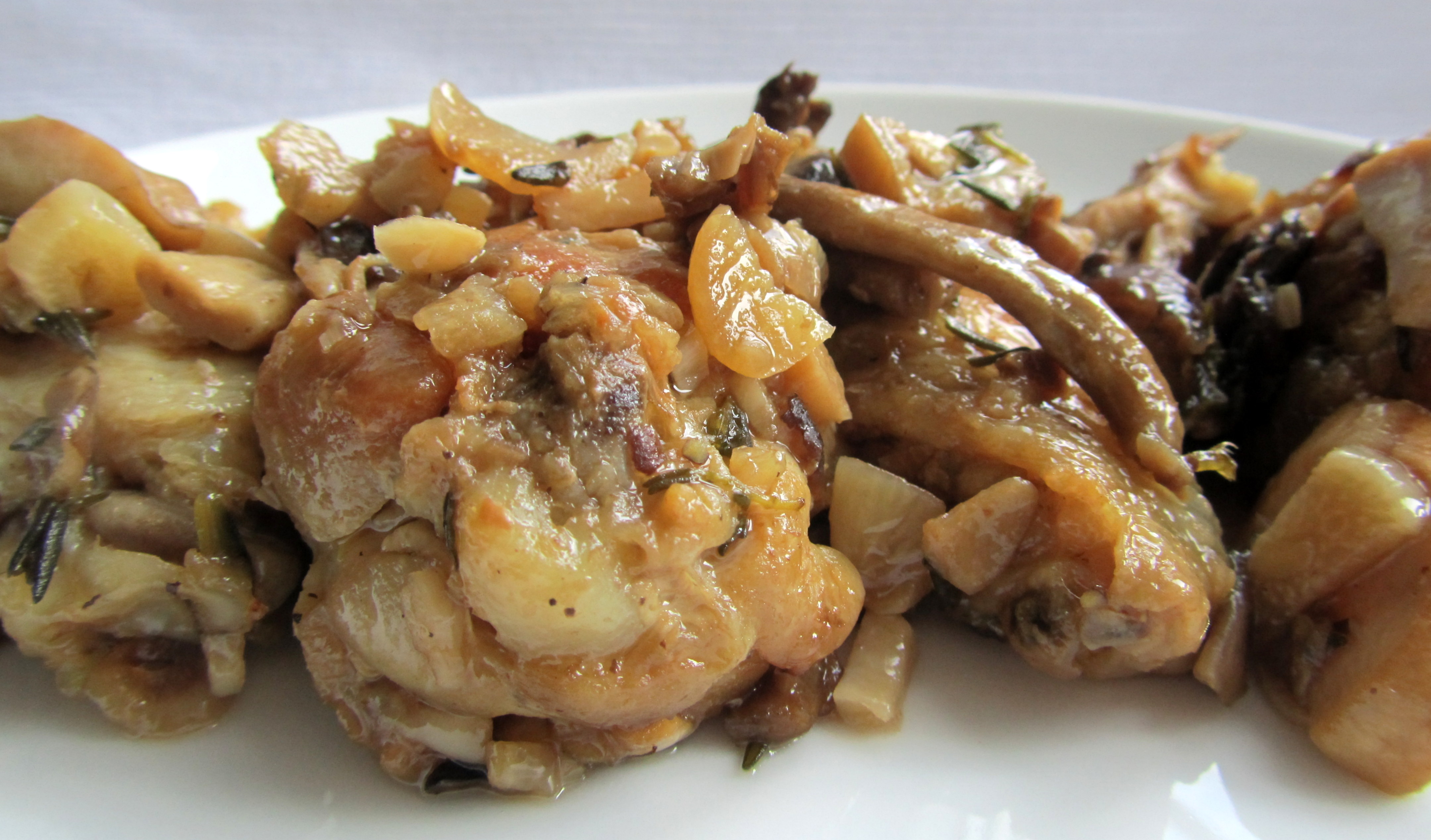
It seemed like a good idea to cook this dish for the 10th anniversary of my doctoral exam. It is almost finger food, it is somehow Spanish and its recipe seemed straightforward enough. For an extra touch of nerdiness, I could even use the same species of mushrooms I used for my PhD (Pleurotus eryingii, if you really must know).
Then, I realized the recipe called for 30 (thirty) garlic cloves for 6 persons. Cook for twelve, and you’ll end up with 60 (sixty) of them to peel and slice. I.e. at an average of 10 cloves per head, 6 garlic bulbs. Or, if you want to be very precise, at an average of 90g per bulb, about 540g of garlic to slice. In total, it was a 1h long operation that left me with tears in the eyes, redness in the fingers and the taste of garlic in the back of my throat. Needless is to say that after that I just had to had a shower before I find myself ready to face the company of civilized people. It took a good couple of weeks until I felt the need of using garlic, either in major or minor proportions.
At some point, I was getting concerned this dish would actually work. For more drama, after having seen a big bowl of garlic being poured into the concoction, my suffering testers dinner guests were showing an increasing preoccupation about its palatability. It was a wasted worry. It was indeed a delicious dish. A bit garlicky, but far to be the garlic overdose some catastrophists had anticipated. The white wine just cuts the grease, the thyme added some freshness to it, the chicken wings get soft and tender… Perfection on a small dish cooked with humble ingredients.
Chicken wings with mushrooms (adapted from Ferran Adrià’s The Family Meal)
Ingredients (for 6)
- 18 chicken wings, tips removed and cut in half through the joint
- 100mL olive oil
- 360g of mushrooms, sliced (it can be button mushrooms, chanterelles, shitake, Pleurotus, all the above, other that is on season. On this occasion, I just got a mixed bag from my local supermarket).
- 30 (thirty) garlic cloves roughly sliced
- 3 dried bay leaves
- 3 fresh thyme springs, leaves pulled out
- 180mL white wine
- 150mL water
- Salt and pepper to taste
Method
1. Season the half chicken wings with salt and pepper.
2. Heat the olive oil in a large pan until it is hot and add the chicken wings. Cook them gently for about 30min, turning regularly.
3. When the chicken wings are evenly browned, drop in the garlic and cook for 5 more minutes.
4. Add the bay leaves and the thyme and mix.
5. Poor in the white wine, and turn up the heat and let it simmer until the wine has reduced a little.
6. Add the mushrooms and cook for 2 minutes until they are well incorporated with the meat, garlic and herbs.
7. Poor in the water and let it simmer until it has evaporated and the mushrooms are soft.
Meatballs in rich tomato sauce
Posted: April 9, 2012 Filed under: Beef, Pork, Vegetables | Tags: Beef, Carlos Horrillo and Patrick Morcas, Pork, Spain, Tomato Leave a comment
A few weeks ago, I posted the watered down light version of this dish. A dinner party loosely inspired in Spanish cuisine prompted me to do the actual thing, with all its condiments, red wine and olive oil. Mind you, for extra slow-home-made-cooking points, the meatballs were rolled by hand with all love and care by T. and myself. It seemed like a lot of food, but at the end all it was left was the meatballs used for this snapshot. And, I had to hide it in a dark corner of my fridge.
Meatballs in rich tomato sauce (adapted from Carlos Horrillo and Patrick Morcas’ Tapas: Simple Flavours, Striking Combinations)
Ingredients
For the meatballs
- 650g of minced pork and beef
- 2 pinches of very finely chopped fresh rosemary, thyme, mint, basil, tarragon, coriander and oregano.
- 1large egg
- small yellow onion, finely diced
- 1 red chili, finely chopped (or to taste)
- 300g fresh breadcrumbs
- Salt and pepper to taste
- Enough olive oil to coat the baking tray
For the tomato sauce
- Olive oil
- 1 small yellow onion finely chopped
- 1 medium carrot, peeled and finely sliced
- 1 stick celery, finely diced
- Salt and pepper to taste
- 70mL ruby Port
- 250mL red wine
- 3 cans of 400g-chopped plum tomatoes
- 10 fresh basil leaves
- 2 bay leaves
Method
1. Preheat the oven to 180 oC.
2. Put all the meatball ingredients in a large bowl, and season all the salt and pepper. Combine with your hands until you have a consistent mixture which allows you to form the meatball.
3. Start rolling the meatballs with your hands.
4. Put a generous amount of olive oil in baking tray
5. Drop in the meatball, stirring them to coat them evenly.
6. Put the tray in the oven for 30min, or until the meatballs are all golden brown. Do not forget to stir them occasionally to cook them in all directions.
7.While waiting for the meatball, start the tomato sauce. Place a large, deep sided saucepan on a low heat and pour in enough olive oil to coat the bottom. Add the sliced vegetables and season with salt and pepper. Fry gently until they are soft and start to color.
8. Poor in both wines, and bring to boil.
9.When the wine is boiling and has reduced to half the volume, drop in the tomatoes. Season again, and bring to boil, stirring at all times.
10. Turn the heat to low and let simmer for about 15min.
11. Once the meatballs are cooked, fold them in the tomato sauce. Let it simmer for 10min more. (in reality, what I did was to do the tomato sauce and the meatballs in advance. On the day of the party, I combined them both while cold. Then, I slowly warm them. It actually tastes better, as the flavors combine and develop).
Idiazábal cheese and caramelised onion tapa
Posted: March 30, 2012 Filed under: Snacks, Tapas, Vegetables | Tags: Cheese, Onions, Simone & Ines Ortega, Spain, Tapas Leave a comment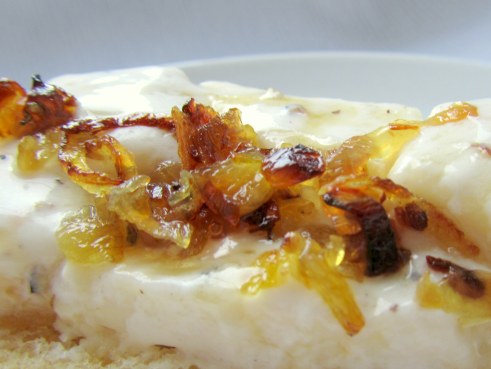
Nowadays, you can get decent (and indecent, for that matter) Manchego cheese in almost every supermarket. But, Idiazábal cheese is only to be found in high end delicatessen shops, at the price of an arm, a leg, and your children corneas. I only remember having it once in the 9 years I have been living in Switzerland, and truth to be said, it was a Spanish acquaintance who smuggled it in gruyère -land.
In case you are wondering, Idiazábal is a Denominación de Origen [Protected designation of origin] hard sheep cheese from the Basque and Navarre regions, which has a rich smoky flavor. Apparently, the Basque shepherds used to store the cheese in their huts over Winter. The smoke coming out of their fireplaces eventually permeated their dairies, giving it a new flavor that the shepherds preferred. All I can say is that the flavor (and aroma) is strong. Very strong…
In fact, so strong I thought my suffering testers dinner guests wouldn’t appreciate it to its full splendor. I resorted to Simone and Inés Ortega’s The Book of Tapas for help, and as it turned out, it was actually a very good idea to serve this tapa rather than the pure thing. The sweetness of the onion and honey complement to perfection the slightly less smokey and hot-ish flavor the cheese, for complete delight of guests and cook.
Idiazábal cheese and caramelised onion tapa (adapted from Simone and Inés Ortega’s The Book of Tapas)
Ingredients
- 200g Idiazábal cheese, rind removed and sliced
- 1 cup (=250mL) milk
- 2 teaspoons black peppercorns, slightly crushed
- 1 cup olive oil
- 1 onion, finely sliced
- 6 slices of French baguette
- 1 teaspoon honey
Method
1. Put the cheese in a bowl, add the milk and the crushed peppercorns. Let it sit for about 30min (until it is a bit softer)
2.In the meanwhile, heat the olive oil in a non-adherent frying pan until it shimmers. Drop in the onion, and let it caramelise, stirring every now and gain.It should take about 15min.
3. Fish the cheese out of the bowl and pat dry with kitchen paper.
4.Place each slice of cheese on top of the bread and drop about 1 teaspoon of the caramelised onions over it. Finish the tapa by drizzling a little honey over it.
Valencian salad
Posted: March 23, 2012 Filed under: Salad | Tags: Almonds, olives, Red pepper, Thomas Keller, vinaigrette 1 Comment
Have been many times to Valencia, and never saw this combination. Normally, what you get if you ask for an ensalada valenciana is a mix of tomato, lettuce, onion and olives, dressed with some olive oil, vinegar and salt. In any case, Thomas Keller’s take is absolutely worthwhile trying… A lot of flavors that seem that won’t go together, but compliment each other to perfection.
Valencian salad (adapted from Thomas Keller‘s Ad Hoc at Home)
Ingredients
- Baby leafs ensemble by Migros (the original called for frisée and watercress, which I could not find).
- Roasted red peppers (the original recipe called for piquillo peppers, a bit challenging to find in this part of the world; see bellow for a recipe of roasted red peppers )
- Spanish olives
- Valencia oranges
- Marcona almonds
- Roasted garlic vinaigrette (see below for recipe)
Method
Put everything in salad bowl, in a proportion that makes sense to your taste. Gently mix the vinaigrette. Serve.
Roasted garlic vinaigrette (adapted from Thomas Keller‘s Ad Hoc at Home)
Ingredients
- 1/2 cup (=120ml) champagne vinegar
- 2/3 spoons garlic puree (just blend the equivalent of 2 – 3 confit garlic cloves)
- 1 1/2 cup (360ml) extra virgin olive oil
Method
Mix the vinegar and garlic puree. Add the oil slowly, whisking until emulsified and smooth. Put in the fridge in a covered container until use.
Roasted red peppers (adapted from Ferran Adrià‘s The Family Meal)
Ingredient
- 2 large red peppers
- Olive oil
- Salt and pepper freshly ground
Method
Preheat the oven to 200°C/400°F/Gas mark 6. Rinse the peppers, and then place in a roasting tin while still slightly wet.
After 45min, the peppers will be blackened and soft. Leave until cool enough to handle. Keep any juices that have collected in the pan.
Peel the skin from the peppers and remove the seeds. Do this over a bowl to catch any juices.
Cut the pepper flesh into thin strips. Put the peppers and the reserved juices into a pan and simmer over a low heat for 5min.
Bananas with lime and rum
Posted: March 18, 2012 Filed under: Dessert, Fruit | Tags: Bananas, Ferran Adria, Lime, Rum Leave a comment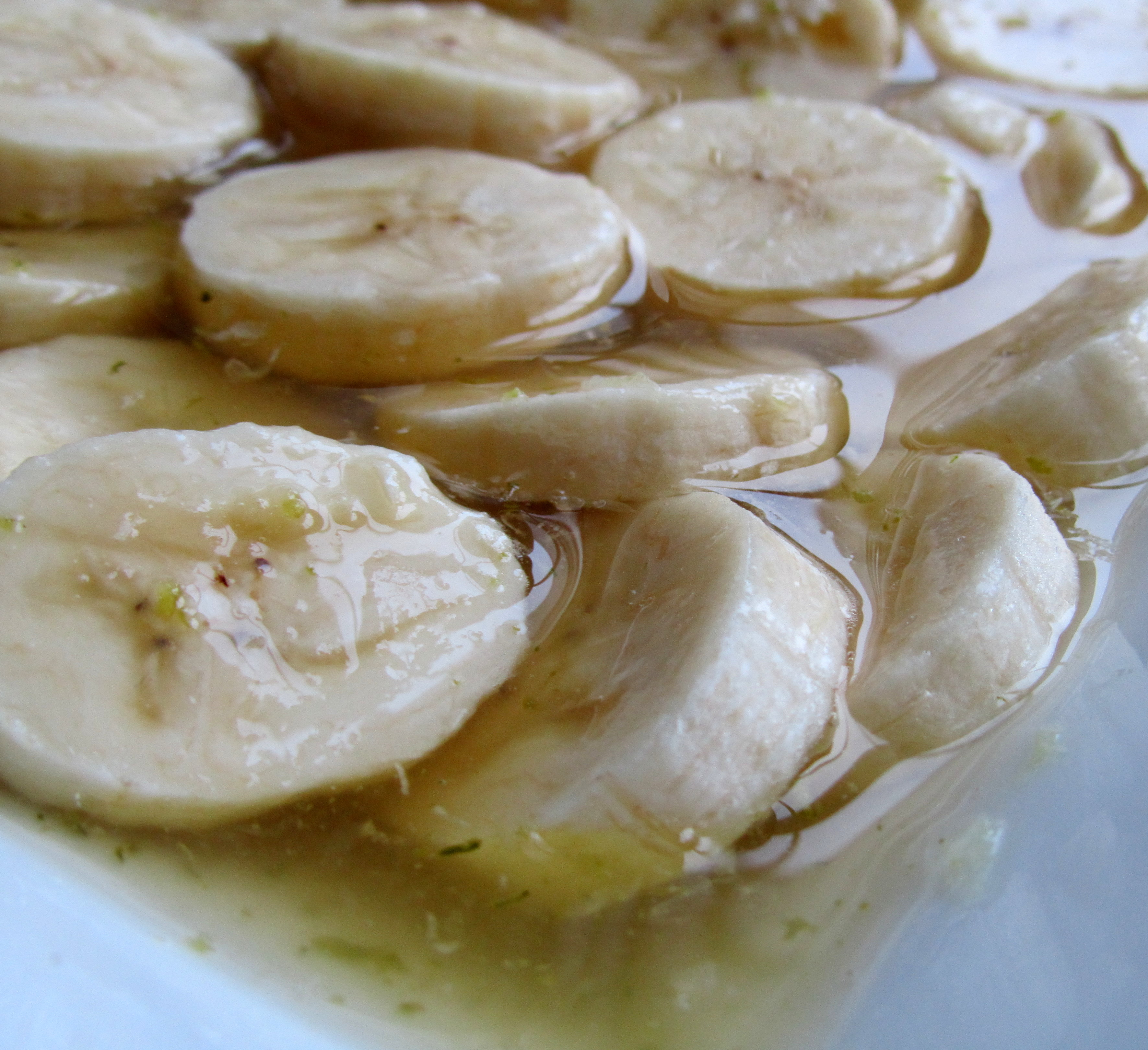
Cheap, cheerful and (almost) universally liked by grown ups and kiddies. The kind of thing you can prepare on the fly a few hours in advance and let rest in the fridge. It won’t let you down, as long as you make sure the version for kiddies is rum-less.
Bananas with lime and rum (adapted from Ferran Adrià’s The Family Meal)
Ingredients
- 80g sugar
- 100 mL rum
- 50 mL water
- 6 bananas, peeled and finely sliced
- The zest and juice of 2 limes.
Method
Poor the water into a pan and mix the rum and sugar. Heat gently until the sugar has dissolved, stirring all times. When the sugar has solved, allow to cool. Then, mix in the lime zest and juice. Finally, put the banana slices into the sirup. Leave to marinade in the fridge for a few hours.
Almond soup with Caramelita ice cream
Posted: February 29, 2012 Filed under: Dessert | Tags: Almonds, Ferran Adria, Ice cream, Sugar Leave a comment
When I saw this dish on Ferran Adrià’s The Family Meal, I decided to try it on a heart beat. All in all, it was an emotional decision driven by gluttony, which could have be a serious contestant to the Darwin Awards of cooks. As I was plating, I realized that M., the poor suffering tester, is allergic to almonds. Needless should be to add (once again) that am lactose-intolerant. Would a dessert made of ressuspended almonds and milk-derivatives be a good idea given these combined food challenges? Really, no need to answer. It is already bad enough the question needs to be made. Fortunately, G. showed up for a coffee the day after, and volunteered to help with the full platted dish. He said it was good, and asked for more…
About the dish itself – making the almond soup is actually a bit more laborious than I expected. Filtering the almond suspension can ended in a bit of a mess. In case you wonder why I am cooking for 6: Adrià justifiably says this is the minimum you should do, as it takes some critical mass to get the almond soup right. And, really, go for the Marcona almonds if you can source them. Anything less than that, and you won’t taste its flavor. In the absence of nougat ice cream, I tried Caramelita. It is a good combination, but apparently a bit too sweet (probably true – Moevenpick ice creams tend to be on the sugary side of life).
Food intolerances apart, this is actually a lovely dish for a dinner party. You can do the soup in advance and then plate when you need it. It is an elegant combination of flavours and textures, which won’t disappoint the hard core foodies.
Almond soup with Caramelita ice cream
Ingredients (for 6)
- 240g of Marcona almonds
- 600mL water
- 80g sugar
- whole caramelised almonds to tastes
- Caramelita ice cream to taste (original recipe called for nougat ice cream, which I was not able to find).
Method
Put the almonds in a food processor and roughly chop
Tip them into a large bowl, then add the water
Leave to soak for 12 hours in the fridge
Use a hand held blender or food processor to blend the almonds and water until smooth and creamy
Carefully strain through a fine meshed metal sieve, using the back of a ladle to help the soup pass through the sieve.
Add the sugar and whisk until it dissolves
To serve, put a triangle of three caramelised almonds in the bottom of a bowl. Place a scoop of ice-cream in the centre of the triangle
Poor the almond soup around the ice-cream.
Fish wrapped in ham with crushed peas and warm tomato
Posted: February 21, 2012 Filed under: Fish, Vegetables | Tags: Cod, Fish, Ham, Mafalda Pinto Leite, Peas, Tomato Leave a comment
Another MaMafalda Pinto Leite’s Cozinha Para Quem Não Tem Tempo [Cooking for those who have no time]. It is quick, easy and a spectacular combination of flavors. I was a bit too slow, but the author probably only set up the alarm clock once she got all the ingredients prepared. Still, it is worthwhile doing it.
Fish wrapped in ham with crushed peas and warm tomatoes
Ingredients
- 4 rosemary springs
- 4 white fish firm fillets (I used fresh cod)
- 4 prosciutto or jamón slices
- 2 tablespoons olive oil
- 1 leek cut in slices (only the white parts)
- 2 tomatoes finely chopped
- 2 cups of frozen peas
- 1/2 of vegetable or chicken stock
- 2 tablespoons chopped minth
- Salt and pepper to taste
Method
Put the rosemary springs on top of each fish fillet. Pepper it. Wrap each fillet with one ham slice.
Heat half the olive oil in a frying pan in medium-high heat. When it is hot, put the fish in, and cook for 4 minutes or until it is done. Transfer to a plate and cover with foil to keep warm. Fold the tomato into the same frying pan and cook for about 1 minute or until it is warm.
In the meanwhile, heat the other half of the olive oil in a medium size sauce pan. When it is pipping hot, fold in the sliced leeks and sauté until they are soft. Poor in the stock and let it boil. Then, add the peas and bring to boil for about 6min. When ready, add the mint, salt and pepper to taste. Crush the peas.
Serve the fish together with the tomato and the crushed peas.
Chestnut soup with rosemary pesto
Posted: February 17, 2012 Filed under: Soup, Vegetables | Tags: Chestnuts, Herbs, Mafalda Pinto Leite, Pesto, Soup 1 Comment
Still bitterly cold in Zurich. The type of weather that calls for a hearty soup to keep you warm… Randomly found this recipe in Mafalda Pinto Leite’s Cozinha Para Quem Não Tem Tempo [Cooking for those who have no time]. The combination of flavors looked exactly what I was looking for and I even fancied chestnuts, for whatever obscure metabolical reasons. You cannot wrong with this recipe, but this gets hardly done in the 30min she claims it take. The original recipe called for 150mL of cream to be added at the end. I found it a bit excessive and replaced the cream an equivalent quantity of chicken stock.
It was really good and soul warming. And, it is really worthwhile to make the rosemary… it just gives the soup a little punch, making it more interesting.
Chestnut soup with rosemary pesto
Ingredients for the soup
- 800g of peeled chestnuts (I used frozen ones)
- 1/2 cup of olive oil – about 120 mL
- 2 yellow onions chopped
- 3 celery sticks sliced
- 125g bacon slices, shredded
- 2 garlic cloves, crushed
- 1 red skin potato
- 1,5L chicken stock
Ingredients for the rosemary pesto
- 1 table spoon of finely chopped rosemary
- 1 garlic clove
- 20g pinenuts
- salt
- 40g of grated Parmesan cheese
- 100 mL olive oil.
Method
Heat the olive oil in a big saucepan until it shimmers. Add the onion, celery, bacon and garlic. Cook for 10min or until the onion get soft and the mix start to color.
Add the chestnuts, the potato and the garlic. Add in salt and pepper to taste.
Bring it to boil, cover, and then let it simmer for about 25min, or until all ingredients are soft.
In the meanwhile, start the pesto. Put the rosemary, garlic and pinenuts in a mixer. Blend and after, add the cheese and the salt. Add slowly the olive oil, mixing at the same time so you get a creamy mixture.
Finally, blend in the soup (if you want to add cream, this is your chance to do it).
Serve the chestnut cream sprinkled with the pesto.
 Lucie Loves Food